What this guide covers
- Sort the collection without covering the whole counter
- Measure the container and the hand path
- Choose the location before the organizer
- Spice-zone diagram
- Compare five storage forms against the same inventory
- Make labels readable without creating a decanting project
- Separate active jars from unopened backups
- What not to buy or change yet
- A ten-minute spice reset
- FAQ
- Method notes
- Sources
Spice storage in a small kitchen works best when the jars you use are visible, the labels remain readable, and the location stays away from the heat, moisture, and direct light identified by the product guidance. Begin with the bottles already in the kitchen. Group duplicates, record the tallest and widest containers, and measure one possible shelf or drawer before buying a rack or transferring anything into matching jars.
Sort the collection without covering the whole counter
Take out one row, drawer, or basket at a time. Place each item into one of four temporary groups: used most weeks, used occasionally, unopened backup, and needs a label or date check. Return each group before opening another zone. This keeps the kitchen usable and reveals whether the real problem is poor visibility, too many duplicates, or containers that do not fit the assigned space.
- Keep every original label, best-use date, ingredient list, and allergen information readable.
- Group duplicates together instead of letting the same spice occupy several cabinets.
- Measure the tallest bottle, widest lid, usable shelf or drawer, and retrieval path.
- Check the exact product guidance before choosing a spot near a stove, sink, window, or appliance.
- Test visibility with the existing containers before considering a tier, tray, turntable, or insert.
Measure the container and the hand path
A shelf can be deep enough for two rows yet still fail when the back row cannot be lifted past the front. A drawer can hold every jar lying down yet hide the labels or stop closing once a lid catches the cabinet frame. Record the smallest clear opening, not only the larger interior. Then mimic the full action: open, see the label, grip one jar, remove it without moving five others, and return it.
| Measurement | Where to take it | What it prevents |
|---|---|---|
| Usable width | Between hinges, drawer sides, or shelf supports | An insert that fits the cabinet body but hits hardware |
| Usable depth | Front edge to the first pipe, bracket, back panel, or door obstruction | A rack that stops the door or drawer from closing |
| Clear height | Shelf to shelf, or drawer base to the lowest frame above | Tall bottles or raised tiers catching during use |
| Container range | Tallest bottle, widest lid, and shortest label area | A neat layout that works for only one jar shape |
| Retrieval space | Space in front of and above the stored row | Having to unload the whole zone for one spice |
| Heat and moisture | Distance and exposure from stove, sink, dishwasher steam, and direct sun | Choosing convenience over the storage directions on the product |
Choose the location before the organizer
McCormick’s storage guidance for dried herbs and spices recommends keeping them away from heat, moisture, and direct sunlight, including avoiding storage close to the stove or sink. That makes the nearest-looking spot unsuitable in some small kitchens. Observe the proposed cabinet during normal cooking and dishwashing. If it becomes warm, catches steam, or receives strong sun, use another zone even when the shelf looks perfect in a photograph.
Start with the measured zone logic in small-kitchen cabinet zones. A shallow upper shelf may suit a single visible row. A wide, low drawer may suit label-up containers if the drawer closes freely. A small pantry shelf can work when the spacing follows measured pantry shelf spacing. Keep only genuinely daily seasonings on a counter; the clear-counter reset should still leave the counter’s main task usable.
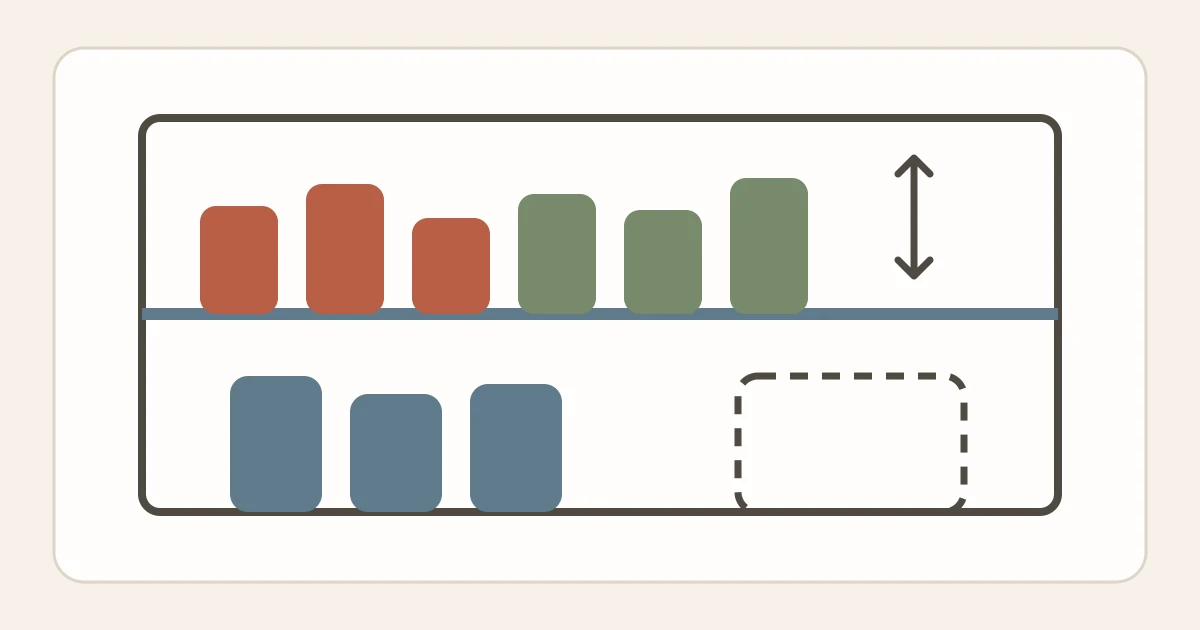
Spice-zone diagram
The frequent row is arranged for label visibility rather than maximum density. Occasional jars have a separate shelf, while unopened backups remain one bounded group. The heights are examples only; use the real containers and opening.
Compare five storage forms against the same inventory
A single shallow shelf row
This costs nothing and keeps every front label visible. It works when the shelf is shallow or the collection is small. If the shelf is deep, reserve the rear for a clearly separate backup group rather than placing a second active row behind the first.
A drawer with labels facing upward
A drawer can make a mixed collection easy to scan, but only when bottle height, lid diameter, and drawer clearance allow it. Test one tall and one wide jar at the front, center, and back. Use small-kitchen drawer organization before choosing a tray or divider, because a drawer insert must fit the internal box and the closing path.
A tiered shelf riser
A riser can reveal a rear row, but it also reduces clearance above the tallest jars and may create an unstable narrow step. Measure the outside dimensions and every tier. Place a representative bottle on each level and test retrieval. Follow the organizer’s surface, use, and load instructions rather than assuming any tier fits food-storage containers.
A turntable
A turntable can expose jars from a deep corner, but its round footprint may waste a narrow rectangular shelf. Measure its full rotating diameter and the height of bottles near the cabinet walls. Spin it slowly with the proposed contents and confirm nothing catches, tips, or blocks the door.
A door, wall, or magnetic rack
This is a mounting decision, not simply a space-saving choice. Added depth can hit shelves or prevent a door from closing, and a metal-looking appliance surface is not automatically approved for a magnetic load. Check the lease when relevant, the exact surface, appliance or cabinet instructions, and the rack’s requirements. A freestanding shelf or drawer is the simpler fallback when those answers are unclear.
Make labels readable without creating a decanting project
Turn existing jars so the product name faces the approach direction. If the lid is the only visible surface, add a removable duplicate label while keeping the original package information intact. Include the product name and any household-relevant distinction, such as sweet versus smoked paprika. Do not cover the ingredient list, allergen statement, storage direction, lot information, or date.
Matching containers are optional. Transferring every spice introduces cleaning, drying, identification, and refill work. Never mix a new product into an unidentified remainder, and do not rely on appearance alone when two powders look similar. If decanting is chosen, follow the food-contact container and spice manufacturer’s guidance and transfer the identifying information accurately.
Separate active jars from unopened backups
Keep one active jar in the frequent or occasional zone. Put unopened duplicates in one small backup area with the labels facing forward. Before adding a duplicate to a shopping list, check that area. When the backup boundary is full, the useful response is to review the inventory, not to create a second backup zone in another room.
What not to buy or change yet
- Do not buy a rack based on a stated jar count; compare its actual dimensions with your actual bottles.
- Do not place spices above or beside a cooking surface merely because the jars are convenient there.
- Do not drill a cabinet, wall, or appliance panel before confirming permission, material, services, and product instructions.
- Do not replace readable original labels with decorative labels that omit important information.
- Do not make every jar identical if the transfer routine will be harder to maintain than the current collection.
A ten-minute spice reset
- Return every jar to the frequent, occasional, or backup zone.
- Turn labels toward the normal viewing direction and wipe the storage surface according to its care instructions.
- Check for duplicate open jars, loose lids, damaged containers, missing names, or a product that no longer belongs in the zone.
- Add only confirmed gaps to the shopping list; do not shop from memory.
- Recheck the location after a period of heavier cooking or warmer weather if heat or moisture exposure may have changed.
FAQ
Is a drawer always better than a cabinet for spices?
No. A drawer works when bottles fit below the closing path and labels remain visible. A shallow cabinet row may be simpler for tall jars or a small collection. Compare the same inventory in both zones before purchasing an insert.
Should I arrange spices alphabetically?
Alphabetical order helps when the collection is large and names are readable. A small household may find frequent versus occasional groups faster. Choose one rule that every cook understands, then keep the labels visible enough for that rule to work.
Can spices stay on the counter?
Only when the product guidance and actual exposure make the location suitable. Direct sunlight, heat, cooking splatter, and sink moisture can make a convenient counter a poor storage zone. Keep the counter’s working task clear and move the collection if conditions are unsuitable.
Do matching jars save space?
They can make dimensions more predictable, but they do not automatically create useful capacity. The transfer may add work and remove identifying information. Measure first and change containers only when the benefit is specific and the labeling and cleaning routine remain reliable.
Method notes
This guide applies the Start Here method to a small food-storage category: inventory first, measure the container and retrieval path, check the environment, then test one storage form. It extends small-kitchen cabinet zones without repeating the whole-cabinet layout, and it does not rank brands or prescribe a universal spice location. Browse Kitchen Organization for the surrounding kitchen system.
Sources
- McCormick, official parsley storage guidance for an airtight container away from heat and moisture — mccormick.com/blogs/how-to/about-parsley-uses-pairings-and-recipes
- McCormick, official garlic-powder and spice guidance to avoid the stove, sink, moisture, heat, and direct sunlight — mccormick.com/blogs/how-to/about-garlic-uses-pairings-and-recipes
- IKEA, official overview of drawer, wall-shelf, and counter approaches for cooking spices — ikea.com/ca/en/rooms/kitchen/how-to/where-to-store-cooking-spices-in-your-pantry-or-kitchen