What this guide covers
- Define “reset” before starting
- Build the route from household handoffs
- Use four passes instead of cleaning room by room
- Pass one: protect routes and working access
- Pass two: return by zone, not by object
- Pass three: complete planned care tasks
- Give laundry one next state
- Pass four: close the reset safely
- Set a capacity for the deferred list
- What not to include in the timed reset
- FAQ
- Method notes
- Sources
A weekly reset for a small apartment should restore the routes, surfaces and handoffs that make the next week easier; it should not turn into an all-day deep clean. Choose a fixed stopping point, follow the same short route, and move deferred repairs, decluttering projects and intensive cleaning onto separate lists. The routine succeeds when the home is usable at the end, even when every backlog item is not finished.
Define “reset” before starting
A reset returns active spaces to their assigned jobs. The entry route becomes walkable, laundry reaches its next stage, dishes leave the sink, frequently used surfaces are ready, bins are handled, and supplies return to safe storage. Scrubbing grout, reorganizing a closet and deciding the fate of sentimental objects are projects. Mixing projects into the route is how a predictable reset expands into an exhausting day.
- Choose a realistic time box and write the stop time before touching anything.
- Follow one room route instead of reacting to whichever object looks worst.
- Carry one return basket, waste bag and the approved supplies needed for planned surfaces.
- Record repairs, purchases and decluttering decisions without beginning them mid-route.
- Stop safely when the timer ends and leave chemicals, tools and damp items properly handled.
Build the route from household handoffs
List where unfinished actions collect: shoes at the door, mail on a counter, clothes beside a hamper, clean laundry on a chair, dishes near a desk or supplies left in the bathroom. These are handoff failures, not proof that the room needs a new organizer. Arrange the route so one completed step prepares the next area.
| Reset pass | Finish line | Move to a separate list |
|---|---|---|
| Routes | Doors, windows and normal walking paths are clear | Furniture rearrangement or storage shopping |
| Returns | Out-of-zone items reach their existing homes | Objects with no assigned home or an uncertain owner |
| Kitchen | Sink and primary preparation area are ready for use | Appliance repair, cabinet overhaul or pantry audit |
| Laundry | Every load is in one named stage, not scattered | Stain treatment or garment repair requiring research |
| Bathroom | Frequently touched and planned surfaces are handled | Recurring leak, mold, grout or ventilation concern |
| Close | Waste, tools and products are safely returned | Purchases, donations and next-week projects |
Use four passes instead of cleaning room by room
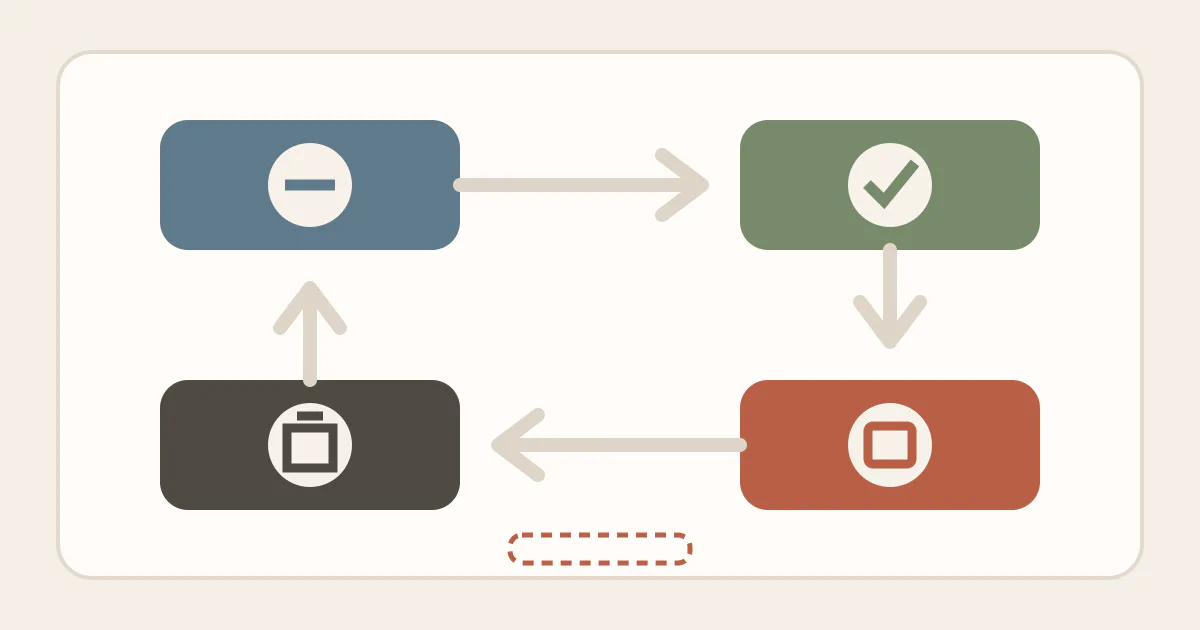
A room-by-room clean can strand items at each doorway. Four apartment-wide passes reduce backtracking: clear routes, collect returns, complete the planned care tasks, then close the system. Keep the route short enough that the end is visible from the beginning.
The loop ends with products, tools and waste closed out; deferred projects stay outside the timed route. The sequence is a planning example, not a cleaning frequency or safety standard.
Pass one: protect routes and working access
Walk from the entrance through each normal destination. Remove only what blocks the route, a door, window, vent, heater, electrical panel or required access. Put obvious trash into the correct waste stream and place items belonging elsewhere in the return basket. The U.S. Fire Administration advises keeping doorways and windows clear for escape; the reset should never create a temporary pile in that path.
Do not reorganize the items yet. If a chair repeatedly becomes overflow, clear it and write “chair landing problem” on the deferred list. The later solution may be a better handoff, fewer items or a changed routine—not another bin beside the chair.
Pass two: return by zone, not by object
Carry the return basket in one loop. At each zone, remove everything that belongs there and continue. Do not stop to refold an entire drawer because one shirt returns to it. If an item has no home, keep it in a small decision tray outside the walking route. Limit the tray by area rather than allowing several new piles.
When the decision tray reaches its boundary, schedule one narrow session using small-home category declutter. That guide works by category without emptying everything at once. The weekly reset identifies the backlog; it should not absorb the whole decision project.
Pass three: complete planned care tasks
Choose the surfaces and tasks before the timer begins. Cleaning and disinfecting are not interchangeable requirements for every surface. The U.S. Centers for Disease Control and Prevention advises reading and following disinfectant labels, using recommended protective equipment and ensuring ventilation when products are used indoors. Use only products suitable for the surface and household situation.
Carry only the supplies that belong in the planned pass. The small-home cleaning caddy helps decide between one portable kit and small zone-specific supplies. Keep products in their original labeled containers where required; the U.S. Environmental Protection Agency specifically advises this for household hazardous products and warns against mixing leftovers.
Kitchen finish line
Complete the current dish stage, clear the main preparation surface and handle planned spills or crumbs according to the surface and product directions. Add an expired-food review, oven clean or cabinet reorganization to another session. A ready sink and work zone is enough for this reset.
Bathroom finish line
Return toiletries, hang towels to dry and address the surfaces selected for the routine. Do not hide recurring moisture, leaks or visible damage behind stored items. Document and report a rental maintenance concern through the appropriate channel rather than treating it as weekly dirt.
Living and work finish line
Restore seating and the main work surface, return cups and cables, and remove waste. Do not start filing a year’s papers or changing the furniture layout. Add those as named projects with a smaller first action.
Give laundry one next state
Laundry does not need to be completely finished for the apartment to be reset, but every load should have a named next step. Dirty clothes enter the hamper, a wash-ready load is contained, drying items stay spaced, and clean items reach a landing zone with a planned put-away time. Use laundry routine without a laundry room for the full capture-to-put-away handoff.
Avoid starting more loads near the stop time than the household can safely complete. Do not leave wet laundry in an improvised pile just to mark “laundry started.” The weekly route should reduce unfinished stages, not create another one.
Pass four: close the reset safely
- Return every cleaning product to its approved, original storage position.
- Rinse, dry or dispose of tools and materials according to their instructions.
- Remove waste without blocking a common hall, exit or building collection rule.
- Wash hands and store protective equipment as directed by the products used.
- Stop the timer, photograph or note the deferred list, and choose no more than one next project.
This close distinguishes the weekly reset from the shorter 15-minute evening reset. The daily routine protects a few high-friction surfaces; the weekly route catches handoffs that need more time. Neither should quietly become a deep-clean promise.
Set a capacity for the deferred list
Use three columns: repair or report, decide or declutter, and buy only after measuring. Limit each column to the few items likely to matter next week. Archive lower-priority ideas instead of copying them forever. A list that grows every week without decisions is another clutter surface.
Choose one project by consequence and friction, not appearance. A blocked cabinet that prevents safe product storage matters more than styling a visible shelf. A maintenance issue or damaged electrical item leaves the routine and follows the relevant owner, manufacturer or professional process.
What not to include in the timed reset
- Do not empty an entire closet, pantry or drawer.
- Do not mix cleaning products or transfer hazardous products into food containers.
- Do not begin a wall installation, furniture move or repair without its own plan.
- Do not buy organizers from the amount of temporary reset clutter.
- Do not keep working past the stop time while chemicals, wet laundry or appliances require attention; close those tasks safely first.
FAQ
How long should a weekly reset take?
There is no universal duration. Choose a time box the household can repeat and reduce the scope until it closes safely within that limit. A predictable 30-minute route can be more useful than an ambitious routine abandoned after one week.
Should the whole apartment be cleaned every week?
Not by one generic schedule. Surface, household, health, lease and manufacturer needs vary. The reset restores function and completes only the planned care tasks; separate recurring schedules can cover other cleaning according to actual use and guidance.
What if the timer ends before the kitchen is finished?
Close the active task safely, return products and leave the sink and primary work area in the most usable state possible. Record the unfinished step and reduce the next route’s scope. Do not leave chemicals, heat or water running to obey a timer.
Can children share the weekly reset?
They can take age-appropriate household tasks under suitable supervision, but product labels and household safety decisions control what they may handle. Keep chemicals, sharp tools, heavy objects and other hazards outside a child’s assignment and reach.
Method notes
This guide applies the Start Here method to one repeatable weekly loop: define the finish line, protect routes, return by zone, complete preselected care tasks and close supplies safely. It complements 15-minute evening reset, small-home category declutter and the broader Layouts & Routines system without prescribing a universal cleaning frequency or pretending deferred projects are failures.
Sources
- U.S. Centers for Disease Control and Prevention, home cleaning and disinfecting guidance including label directions, protective equipment and ventilation — cdc.gov/hygiene/about/when-and-how-to-clean-and-disinfect-your-home
- U.S. Environmental Protection Agency, household hazardous-waste guidance on original containers, labels and not mixing products — epa.gov/hw/household-hazardous-waste-hhw
- U.S. Environmental Protection Agency, Safer Choice program overview and product-search resources — epa.gov/saferchoice
- U.S. Fire Administration, guidance to keep doorways and windows clear for escape — usfa.fema.gov/prevention/home-fires/at-risk-audiences/hoarding