What this guide covers
- Give the rug one clear job
- Map the bare floor before measuring the rug
- Mark the proposed size at full scale
- Choose a relationship, not a copied rug rule
- Include the pad in every decision
- Check movement, edges and the escape route
- Choose pile and material for the real routine
- Coordinate nearby windows and sunlight
- Run a seven-day floor test
- What not to buy or change yet
- FAQ
- Method notes
- Sources
Choosing an area rug for a small rental room is a layout problem before it is a color decision. Measure the usable floor, door swings, furniture footprints, vents and walking path, then mark the proposed rug boundary at full size. The right rug is one that supports the room’s main task without bunching under a door, trapping furniture halfway on an edge or creating a difficult move-out and cleaning routine.
Give the rug one clear job
A rug can define a seating group, soften the step beside a bed, protect an approved floor area or add comfort to a work zone. It does not need to solve all four jobs. In a small room, an oversized or badly placed rug can connect unrelated zones and make every furniture move harder. State the primary job in one sentence, such as “hold the front legs of the seating group” or “provide a clear landing on both sides of the bed.”
- Check the lease and floor-care instructions for rugs, pads, discoloration and move-out cleaning.
- Measure the usable floor after doors, vents, radiators and fixed cabinetry are excluded.
- Record every furniture foot that will sit on, off or repeatedly cross the rug edge.
- Include the compatible rug pad or underlay in thickness and cost comparisons.
- Check product labels, care instructions and current recall information before use.
Map the bare floor before measuring the rug
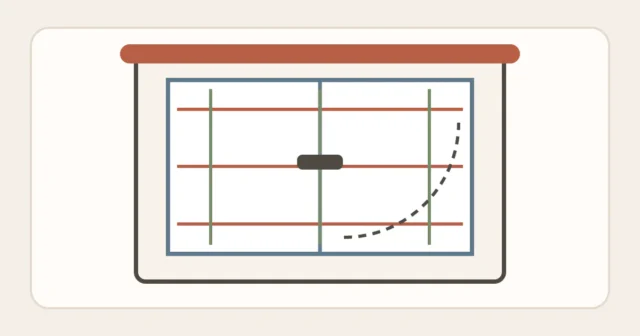
Draw a simple top view of the room. Mark fixed obstacles first, then the furniture in its working position. Open every door, pull out each dining chair and roll the desk chair through its normal movement. Measure the narrowest walkway after those actions. The remaining uninterrupted floor—not the wall-to-wall room size—is the area available for a rug.
| Record | Include | Question it answers |
|---|---|---|
| Usable floor | Baseboards, hearths, vents and fixed cabinets | What rectangle can accept a rug at all? |
| Door clearance | Door bottom, sweep, full arc and floor transition | Will the rug and pad catch or stop the door? |
| Furniture stance | Exact feet, glides and casters in use | Will a leg balance awkwardly on the edge? |
| Movement zone | Chairs pulled out, recliners opened and drawers used | Does moving furniture remain on a stable surface? |
| Total thickness | Rug pile, backing, pad and edge treatment | Will the assembly clear doors and transitions? |
| Cleaning route | Vacuum head, lifting edge and drying requirements | Can the household maintain the chosen material? |
Mark the proposed size at full scale
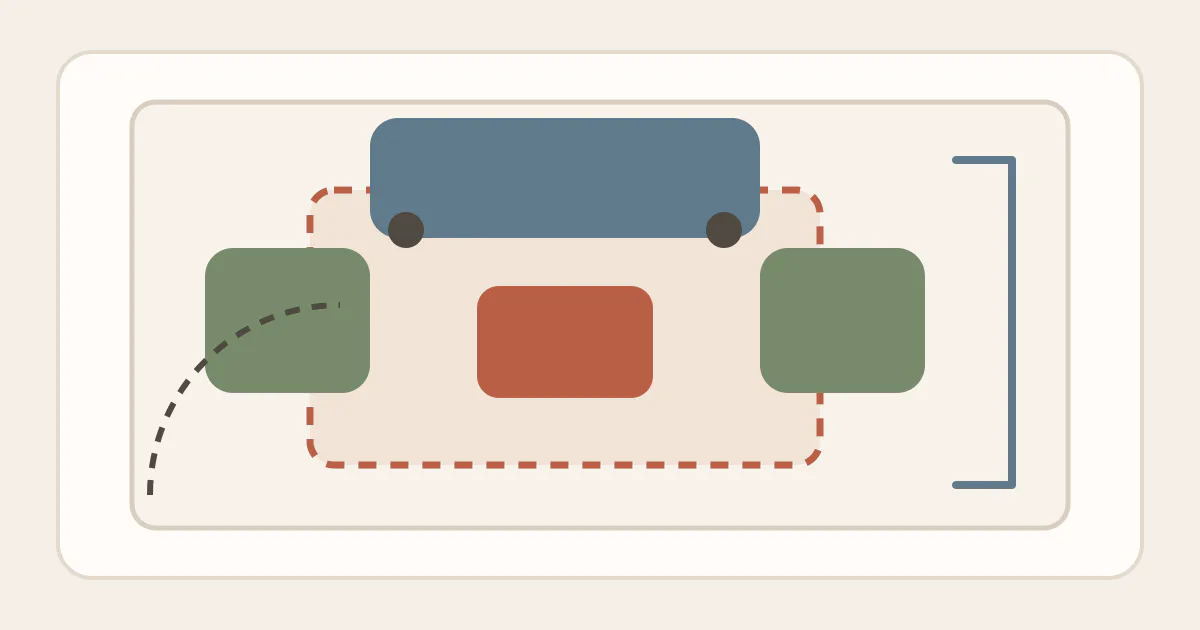
Use low-risk removable painter’s tape only when it is compatible with the floor instructions, or outline the corners with paper that cannot transfer ink or adhesive. Mark the complete rug boundary, then place the furniture as it would sit. Walk through the room for several days. A size that looks balanced from the doorway may still place an edge under the most frequent step or keep a drawer from opening.
The example keeps the furniture group related to one rug while the route and door movement remain outside it. It is not a universal furniture formula; test the actual feet, rug, pad, chair movement and doorway.
Choose a relationship, not a copied rug rule
Seating area
One practical relationship is to place at least the front feet of the main sofa and chairs on the rug so the group reads as one zone. IKEA’s general rug guidance describes this arrangement, but it is not mandatory. A smaller room may work better with all furniture off a centered rug, provided the rug is stable and no frequent step lands on an unsecured edge.
Dining area
Mark the table and pull every chair out to the distance used for sitting down. The chair should not repeatedly cross an unstable rug edge. Measure the full working rectangle, not only the tabletop. If the required rug overwhelms the room or enters the kitchen route, a bare floor may be the more functional choice.
Bedroom
Decide where bare feet should land, then test that relationship with the bed and door. A large rug partly under the bed is not automatically better than two smaller approved runners. Use the circulation and furniture checks in the 10×10 bedroom layout guide; do not sacrifice wardrobe or under-bed access for a photographed layout.
Studio zone
A rug can help distinguish seating from sleeping without adding a divider. Keep its boundary aligned with one functional group rather than the middle of a major path. The studio-apartment zone guide explains how visual zones work with light, movement and furniture. A rug supports that plan; it should not become the only reason the plan exists.
Include the pad in every decision
A pad or underlay may be recommended to reduce movement, protect a floor or support the rug, but it must be compatible with both surfaces and sized according to its instructions. Some rubber, latex, dye or adhesive materials can interact with particular finishes. Ask the property owner or floor manufacturer when the finish is unknown. Do not assume a product labeled nonslip is approved for every vinyl, wood, laminate, tile or heated floor.
Measure rug and pad together beneath the lowest door and at floor transitions. Trim only when the pad instructions permit it and keep the pad fully controlled beneath the rug. A visible pad edge can catch a foot or cleaning tool. Recheck the floor periodically for moisture, transferred color, residue or finish change, especially in sunlit or humid zones.
Check movement, edges and the escape route
Walk every usual direction while carrying laundry, groceries or a child-safe household object that reflects normal visibility. Notice whether toes meet an edge and whether casters or chair legs curl a corner. Keep exits and windows clear; the U.S. Fire Administration advises unblocked doors and windows in a home escape plan. Move or remove the rug if it narrows that route or prevents a door from opening normally.
Use furniture fit-path measurements before buying a large rug that will arrive rolled or folded. The package must pass through the building and turn into the room without damaging walls. Plan where the old rug, packaging and furniture will sit during installation so the route does not disappear halfway through the job.
Choose pile and material for the real routine
Compare the maker’s care method with the household’s tools, spills, pets and drying space. A thick pile may feel comfortable but require more door clearance and a compatible vacuum setting. A flatweave may fit under a door yet move more readily without its specified underlay. Washable describes a care method, not a promise that the rug fits a home machine or can dry safely in the apartment.
Read every label and retain it. The U.S. Consumer Product Safety Commission maintains rug and carpet recall information, including actions related to flammability requirements. A decorative marketplace listing is not a substitute for the permanent label, instructions and a current recall check. Keep rugs and pads away from ignition and heat sources according to their directions.
Coordinate nearby windows and sunlight
Observe direct sun across the planned rug area at different times. Rugs, pads and flooring can change color differently, so review the product and floor guidance rather than promising that a rug will prevent fading. If a window covering is also planned, use rental-friendly window-covering guide to measure its operating space. Long fabric should not drag across the rug or force furniture into the window.
Run a seven-day floor test
- Mark the proposed boundary and photograph the uncovered floor condition.
- Place furniture in its working position and open every door and drawer.
- Use the room normally for seven days, noting every caught edge or awkward step.
- Test the compatible vacuum or cleaning method in the marked zone.
- Confirm the rug, pad, delivery package and care routine all fit before ordering.
What not to buy or change yet
- Do not choose a rug from room dimensions without subtracting door and furniture movement.
- Do not place two furniture legs on a thick edge if the piece rocks or becomes unstable.
- Do not use an unknown pad on a rental floor merely because it is described as nonslip.
- Do not cover moisture, damage or a maintenance issue that should be documented and reported.
- Do not discard labels, care instructions or purchase records needed for a recall or move-out discussion.
FAQ
Does a small room always need a small rug?
No. The useful size depends on the furniture relationship, working movements and clear route. A larger rug can unify one seating group, while a smaller centered rug can leave awkward edges. Mark both sizes at full scale and test the room before ordering.
Can an area rug protect a rental floor?
It may reduce some surface exposure, but it can also trap grit or moisture or interact with a finish. Use only a compatible rug and pad, clean beneath them as directed and document the floor condition. Do not use a rug to conceal existing damage.
Should all furniture legs sit on the rug?
That is one possible arrangement, not a universal rule. The important test is that each piece stands level and stable and that moving chairs do not repeatedly catch an edge. Compare full-on, front-feet-on and fully-off layouts with the actual furniture.
How close can a rug be to a door?
There is no standard gap that fits every door. Measure the complete rug-and-pad thickness beneath the lowest point through the full swing. The door must open normally without dragging, curling the edge or pushing the rug into the route.
Method notes
This guide applies the Start Here method to a reversible floor layer: define one job, map the working room, mark candidate sizes, then test movement and care before purchase. It connects studio-apartment zone guide, 10×10 bedroom layout guide and the seating test in small living-room seating and walkway plan with the rental checks in Rental-Friendly Living, without prescribing a universal rug formula or surface compatibility.
Sources
- U.S. Fire Administration, home fire escape planning and keeping doors and windows unblocked — usfa.fema.gov/prevention/home-fires/prepare-for-fire/home-fire-escape-plans
- U.S. Consumer Product Safety Commission, area-rug and carpet recall category — cpsc.gov/Recall-Products/Area-Rugs-or-Carpets
- IKEA, official area-rug overview with general room-layout relationships — ikea.com/us/en/cat/rugs-10653
- IKEA, official VÄGSKYLT product page advising measurement of the intended floor space and a specified anti-slip underlay — ikea.com/us/en/p/vaegskylt-rug-flatwoven-blue-green-black-00587034