What this guide covers
Useful bathroom storage without drilling starts with reducing what you actually keep in the room, then matching each remaining item to a zone based on how much splash or humidity that specific spot gets — not by picking the first over-door rack or suction shelf that fits the gap. This guide is useful even if you end up buying nothing, since the inventory and zoning steps alone solve a large part of most small bathrooms’ storage problem.
Quick plan
- Reduce what you keep in the bathroom before adding any storage.
- Sort the room into wet, splash, and drier zones before choosing anything.
- Match each mounting type to your confirmed surface and zone, not the other way around.
- Keep plumbing, ventilation, and shower controls fully visible and reachable.
- Plan removal before installing any suction, tension, or adhesive item.
Check before buying or changing anything
Humidity and material suitability decision table
Use this as a starting reference, not a guarantee — always confirm against the specific product’s own instructions and your actual surface condition before installing anything.
| Mounting type | Wet/splash zone suitability | Drier zone suitability | Surface and removal note |
|---|---|---|---|
| Over-door hook or rack | Fine if the door itself is not in the direct spray path | Generally suitable | No surface attachment; check the rack’s own weight rating and door thickness fit |
| Freestanding shelf or cart | Suitable if the base is stable on a wet floor | Suitable | No attachment; check for a non-slip base if placed near the wet zone |
| Tension rod or pole (floor-to-ceiling or corner) | Suitable only if the product is rated for the load and the ceiling/floor contact points are sound | Suitable | No drilling; confirm the manufacturer’s rated capacity and mounting-point condition |
| Suction-mount accessory | Depends entirely on the surface — smooth tile or glass generally hold suction better than textured or painted surfaces | Less relevant here; suction needs a smooth, non-porous surface which is more common in wet zones | Never guaranteed to hold or to remove without a mark; follow the product’s own instructions and re-check adhesion regularly |
| Adhesive strip or hook | Only if the product is specifically rated for humid or wet conditions by its manufacturer | More broadly suitable, following the product’s surface guidance | Not guaranteed damage-free on paint, wallpaper, or textured surfaces; follow cure time and removal instructions exactly |
The decision process, in order
- Reduce first. Retire duplicate or expired products and consolidate what remains before deciding you need more storage. A smaller, current inventory is also easier to keep dry and organized in a room where humidity works against clutter.
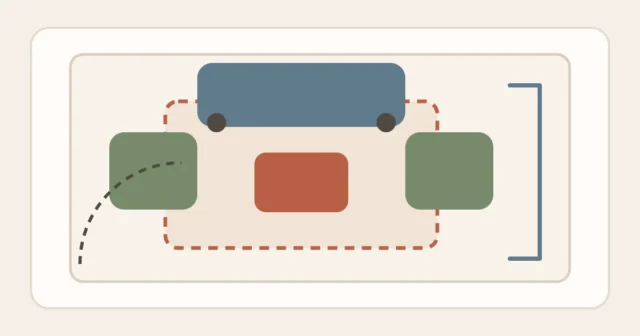
- Map your bathroom into zones. Identify the direct-spray wet zone, the splash zone just outside it, and the drier zone farther away — see the diagram below.
- Check your existing vanity or cabinet capacity. A reassigned shelf inside a cabinet you already have — see organizing a small apartment without buying more bins for the same reassign-before-you-buy approach — often covers more than expected.
- Match mounting type to zone and surface. Use the decision table above as a starting point, then confirm against the exact product’s own instructions and your actual tile, paint, or glass condition.
- Confirm plumbing, ventilation, and control access stay clear. No storage item should block a shutoff valve, a vent fan, a shower control, or the door’s full swing.
- Plan removal before you install. Check the manufacturer’s stated removal method for any suction, tension, or adhesive item now, especially if you are renting, and confirm your lease’s position on attachments before committing to anything more than a freestanding option.
Bathroom-zone diagram
The storage zone sits away from both the wet and splash areas. The vent and valve markers stay clear of any storage placement, regardless of which mounting type is used nearby.
Options by zone
Drier zone: freestanding, over-door, or reassigned cabinet storage
This is the most flexible zone for storage of any kind, since humidity and splash are lowest here. A reassigned vanity shelf, a freestanding cart, or an over-door rack on the bathroom door — if it is not in the direct spray path — all work well.
Splash zone: tension or suction accessories rated for the conditions
Items here get occasional water contact but not direct spray. A tension pole shelf or a suction accessory can work if the product is specifically rated for this level of moisture and your surface matches its stated compatibility.
Wet zone: minimal, purpose-rated storage only
Keep this zone to the smallest amount of storage genuinely needed for items used during the shower itself, using only accessories the manufacturer specifically rates for direct wet-zone use. This is not the place to store anything you are unsure about. A smaller, well-matched wet-zone set is easier to keep secure than a larger one crowded onto the same small rack or shelf.
Beyond the bathroom: linen and overflow storage
Rarely used bathroom items — spare toiletries, extra towels — do not need to live in the bathroom at all. See a small linen closet layout for capping and assigning a nearby linen shelf to hold this overflow instead of crowding the bathroom itself.
What not to buy or change yet
- Do not buy a suction or adhesive product for a textured, painted, or wallpapered surface before confirming that surface is actually compatible with the specific product.
- Do not install any storage item that blocks a shutoff valve, a vent fan, a shower control, or the door’s full swing.
- Do not store electrical items or charge devices in the wet or splash zones.
- Do not install heavy overhead storage or anything the product’s own instructions do not explicitly support for that mounting method.
A repeatable review method
- Weekly, during normal cleaning: check that suction, tension, or adhesive items remain secure. If anything has loosened, take the load off and follow that exact product’s instructions for inspection, reapplication, replacement, or removal rather than improvising a fix.
- Seasonally: re-check the inventory against what you actually use, and remove anything that has not been touched since the last review.
- Before you move out, if renting: follow each item’s own removal instructions rather than assuming removal will match installation.
FAQ
Is a shower caddy that hangs from the showerhead a good option?
This depends on the caddy’s own weight rating and your showerhead’s fitting; check the product’s specific instructions rather than assuming a universal fit, and avoid overloading it with items that make it more likely to slip.
Can I store towels or toiletries directly under the sink?
Often yes, as long as the space is dry and does not block plumbing access — the same plumbing-visibility principle used for kitchen under-sink storage applies here. Check the cabinet base for staining or dampness before assigning it to daily storage, since that is a sign the space may not stay dry.
What if my bathroom has almost no drier zone at all?
Consider moving more of your storage need outside the bathroom entirely — see a small linen closet layout — and keep only daily-use items in the bathroom itself, sized to whatever small drier or splash-tolerant zone you do have.
Do suction hooks eventually stop working?
Do not assume an initial secure hold will remain unchanged indefinitely. If a suction accessory loosens, remove the load and follow that product’s own instructions for cleaning, reapplication, replacement, or retirement; the correct method depends on the specific cup and surface rather than a universal household fix.
Method notes
This guide applies the Start Here method guide to the bathroom specifically: reduce first, zone by moisture exposure, and match mounting type to surface and zone rather than picking a product first. It deliberately does not claim any storage choice prevents mold or mildew, and does not state a universal weight limit or guarantee damage-free removal, since all of these depend on the specific product and surface. For the same reduce-before-you-buy approach applied elsewhere in a small home, see organizing a small apartment without buying more bins, or browse Rental-Friendly Living for more of this reversible-first approach.
Sources
- Command™ Brand (3M), official hook and strip application, surface-compatibility, and removal instructions — command.com/3M/en_US/command/how-to-use
- U.S. Environmental Protection Agency, mold and moisture control guidance — epa.gov/mold/mold-course-chapter-2
- U.S. Consumer Product Safety Commission, home electrical-safety checklist guidance for keeping small electrical appliances away from sinks, tubs, and other water sources — cpsc.gov/s3fs-public/513.pdf