What this guide covers
- Confirm temperature and appliance instructions first
- Audit one shelf at a time
- Measure the cold-space obstacles, not only the shelf rectangle
- Build four broad zones, then let labels override them
- Small-fridge zone diagram
- Use containers only for a named problem
- Create a visible use-first lane
- Keep groceries from taking over the counter
- What not to buy or change yet
- A short weekly fridge reset
- FAQ
- Method notes
- Sources
Small-fridge organization should make food visible without interfering with safe temperature, airflow, spills, or the appliance’s own shelf and drawer design. Check the refrigerator manual and food labels first. Then measure the usable shelf, door-bin, and drawer spaces, keep vents and controls clear, and assign a few broad zones around what the household actually stores.
Confirm temperature and appliance instructions first
The U.S. Food and Drug Administration advises keeping a refrigerator at 40°F (4°C) or below and using an appliance thermometer because a control dial may not show the actual temperature. Organization cannot compensate for an appliance that is too warm. Place and read a thermometer according to its directions, follow the refrigerator manual for settings and vent locations, and address a temperature problem before adding bins or rearranging food.
- Verify the operating temperature with an appropriate appliance thermometer.
- Find vents, sensors, lights, controls, shelf supports, and drawer movement in the manual and appliance.
- Keep raw animal products contained so leaks cannot contact other food.
- Follow package refrigeration, handling, and use-by guidance rather than a generic zone label.
- Leave enough open space for the appliance’s intended air circulation and normal shelf access.
Audit one shelf at a time
Choose a temporary landing surface that can be cleaned appropriately and work quickly enough to keep perishable food within safe handling guidance. Do not empty the entire refrigerator for an organizing photograph. Remove one shelf group, discard only items that the label or authoritative food-safety guidance identifies as unsuitable, wipe spills according to the appliance manual, and return the group before moving to the next shelf.
List the categories that appear every week: ready-to-eat breakfast items, meal ingredients, leftovers, produce, drinks, condiments, or household-specific products. Mark items that repeatedly expire unseen, spill, or block another category. The pattern—not a generic set of clear bins—defines the useful zones.
Measure the cold-space obstacles, not only the shelf rectangle
| Check | What to record | Planning consequence |
|---|---|---|
| Shelf surface | Usable width and depth between walls, rails, and door closure | A bin must fit with the door fully closed |
| Clear height | Shelf to shelf at front and rear, including light housings | Tall containers may fit the front but hit a rear obstruction |
| Vents and sensors | Every opening or control identified by the manual | Keep the specified clearance and do not cover airflow paths |
| Door bins | Internal width, depth, rail height, and bottle removal angle | A bottle can fit standing but fail to pass the retaining rail |
| Drawers | Interior dimensions plus full pull-out and lid or cover movement | Containers must not stop a drawer from closing completely |
| Containers | Outside size with lids, handles, and labels | Nominal capacity does not describe the real footprint |
Measure with shelves and drawers in their correct installed positions. Do not remove a shelf, cover, or drawer merely to gain capacity unless the appliance documentation permits that configuration. A refrigerator is not a pantry with a cooling unit added; its internal components are part of how the model is designed to operate.
Photograph the original shelf and drawer positions before adjusting anything the manual permits. Keep one written measurement sheet beside the weekly food list rather than trusting a product photo. When comparing a bin online, include its rim, handle, taper, and lid in the fit check. A container that occupies the full recorded depth can still be unusable if fingers cannot grip it or the refrigerator door must be forced against a projecting edge.
Build four broad zones, then let labels override them
Ready-to-eat and frequent items
Give frequently used, ready-to-eat items a visible shelf section so they are not hidden behind tall bottles. Keep packages closed and follow their storage directions. A low open tray can group a breakfast or lunch category if the tray is suitable for refrigerator use and does not block airflow.
Ingredients and meal components
Group ingredients used together in a bounded section rather than spreading them across every shelf. This is a workflow choice, not a food-safety rule. Any product-specific refrigeration, separation, or placement requirement takes priority over convenience.
Produce drawers
Use drawers according to the refrigerator manual and produce guidance. Humidity controls and drawer purposes differ by model. Label a drawer only after confirming how its control works; do not copy a high- or low-humidity setting from another refrigerator.
Leak-controlled raw products
FDA guidance emphasizes separating raw meat, poultry, seafood, and eggs from other food. Keep these products securely wrapped or in a covered, leak-resistant container positioned so a leak cannot drip onto ready-to-eat food. Many layouts use a low shelf, but drawer construction and manufacturer instructions vary, so containment and separation—not a universal shelf number—control the decision.
Small-fridge zone diagram
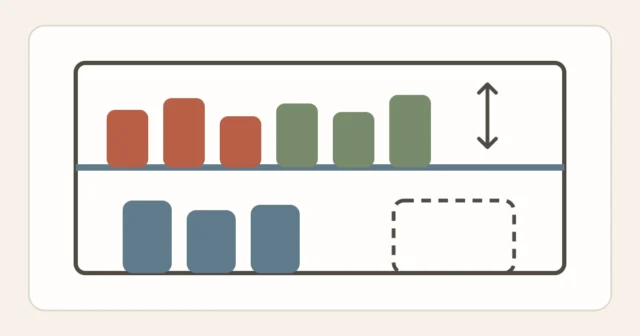
The drawing separates visibility, produce-drawer, and leak-control functions while leaving the example vent open. It does not prescribe a shelf order for every model; use the appliance manual, food labels, and actual temperature.
Use containers only for a named problem
A low tray can keep a meal group together or catch a small spill. A lidded food-storage container can protect prepared food when it is suitable for that use. A tall open bin may hide short items or create a cold wall that crowds the shelf. Before buying, place a paper footprint on the shelf and check the proposed container’s outside dimensions, material guidance, temperature suitability, cleaning method, and handle clearance.
Use the matching logic in food-container and lid system so lids remain with bases. Do not treat an organizer bin as packaging: keep food in its original package or an appropriate food-storage container, preserve labels and dates, and avoid putting loose unpackaged food into a general-purpose basket.
Create a visible use-first lane
Choose a small front section for items that should be used soon according to their labels or authoritative storage guidance. This is a visibility prompt, not permission to extend a storage time. Add the date or identity to leftovers using a method suitable for the container, and review the lane before shopping or meal planning. When an item enters, check whether an older equivalent should move forward.
Do not rely on smell, appearance, or a handwritten date alone to judge food safety. FDA storage guidance, package directions, and household risk considerations remain the boundary. When uncertain, use authoritative food-safety advice rather than an organizing rule.
Keep groceries from taking over the counter
Before shopping, review refrigerator capacity and the use-first lane. When groceries arrive, use one washable landing zone and follow safe handling times. Put refrigerated items away before reorganizing shelf decor or pantry goods. The clear-counter reset keeps that landing surface available; measured pantry shelf spacing and small-kitchen cabinet zones can receive shelf-stable categories that do not belong in the cold zone.
What not to buy or change yet
- Do not buy a full set of bins before mapping vents, shelves, door closure, and actual weekly categories.
- Do not remove shelves or drawers unless the refrigerator documentation supports that setup.
- Do not cover vents, sensors, controls, lights, drain areas, or air passages.
- Do not use door bins for a perishable product when its label, food-safety guidance, or the appliance manual indicates another condition.
- Do not overfill a use-first tray until short items disappear behind one another.
A short weekly fridge reset
- Check the appliance thermometer and investigate any reading outside the safe guidance.
- Review labels, dates, leftovers, and the use-first lane using authoritative storage guidance.
- Wipe spills promptly with the method specified for the appliance surface.
- Return categories to their zones without covering vents or packing shelves tightly.
- Before shopping, note genuine gaps and plan around food already present.
FAQ
Should every small fridge use clear bins?
No. Clear bins can group items but also consume space and hide labels behind tall sides. Use one only when it solves a measured visibility or spill problem and remains suitable for refrigerator conditions.
Where should milk and eggs go?
Follow the package direction, appliance manual, and authoritative food-safety guidance. Door temperatures can vary with opening, and refrigerator designs differ, so this guide does not assign every product to a universal shelf.
How full should a refrigerator be?
FDA guidance cautions against packing a refrigerator so tightly that air cannot circulate. The exact practical arrangement depends on the model and vent design. Keep air paths open and verify temperature rather than using a visual percentage.
Can I adjust shelves to fit tall bottles?
Only in the positions and manner allowed by the refrigerator instructions. Confirm the shelf is seated correctly, the door closes, vents remain open, and the new spacing does not make other food hard to contain or retrieve.
Method notes
This guide applies the Start Here method inside an appliance: verify the operating condition, map fixed constraints, inventory real categories, assign visible zones, and add containers only for a named problem. It complements Kitchen Organization without replacing food-safety or appliance instructions.
Sources
- U.S. Food and Drug Administration, Refrigerator Thermometers: Cold Facts about Food Safety — fda.gov/food/buy-store-serve-safe-food/refrigerator-thermometers-cold-facts-about-food-safety
- U.S. Food and Drug Administration, Are You Storing Food Safely? — fda.gov/consumers/consumer-updates/are-you-storing-food-safely
- U.S. Food and Drug Administration, Safe Food Handling — fda.gov/food/buy-store-serve-safe-food/safe-food-handling
- U.S. Food and Drug Administration, Refrigerator & Freezer Storage Chart — fda.gov/media/74435/download