What this guide covers
Luggage is bulky and often used less frequently than everyday belongings, so match each bag to a measured zone by its exterior dimensions, weight, and travel frequency. Start with under-bed clearance or a closet floor; use a high location only when both the storage surface and the way you will retrieve the bag are safe. A small unmeasured obstruction, such as wheels or a bed-frame support, can be enough to prevent a rigid case from fitting.
Quick plan
- Sort luggage by size and by how often each piece actually travels.
- Measure real clearance under beds and above wardrobes before assigning a spot.
- Nest smaller bags inside larger ones to cut the number of separate spots needed.
- Keep your most-used carry-on in the easiest reach, not the deepest closet.
- Recheck the assignment each time you buy or retire a bag.
Measure and check before you assign a spot
Constraints table
| Zone | Typical clearance | Access needed | Surface / lease note | Added cost | Best for |
|---|---|---|---|---|---|
| Under bed | Measure the lowest clearance across the full route in | Monthly to seasonal | None when the frame and access remain unchanged | $0 | Cases that clear every support and can slide out |
| Closet floor | Whatever floor footprint remains after shoes and bins | Weekly to monthly | None | $0 | Frequently used carry-on |
| Above wardrobe or cabinet | Measure to ceiling; reach matters more than depth | Seasonal, rarely | None, but avoid overloading unsecured furniture tops | $0 | Lightweight, stackable bags only |
| Entryway or hall closet | Shared footprint; measure doors and other contents | Weekly, for frequent travelers | Lease and hardware instructions apply to any added fixture | $0 if reassigned | A frequently used bag that does not block the route |
The decision process, in order
- Rearrange before you buy anything. Walk the apartment and note clearances that are empty or underused: beneath the bed, on a closet floor, or on a shelf designed for storage. Do not count a location that blocks a vent, window, outlet, door, walking route, or access to another item. The point of this pass is to learn whether safe capacity already exists, not to assume that every apartment has it.
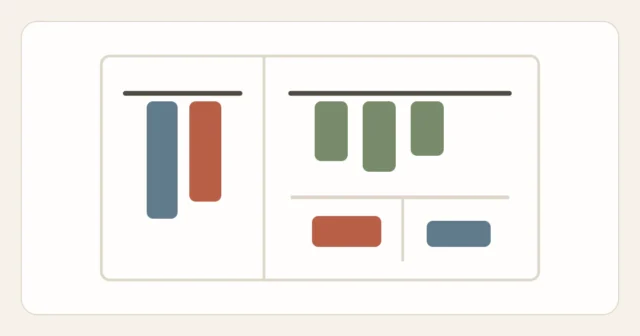
- Sort luggage by size and by frequency of use. Group bags into frequent (used more than a few times a year) and occasional (used once a year or less). Frequent bags earn the easiest-reach zone; occasional bags go to the hardest-reach zone.
- Reduce before assigning space. Check bags with broken zippers, handles, shells, or wheels and decide whether each one still has a purpose that another bag cannot serve. Retire or repair unusable pieces through an appropriate channel; do not force a household-specific collection toward a universal target count.
- Nest what you keep when the materials allow it. A soft duffel, garment bag, or packing cubes may fit inside a larger clean, dry case. Do not force rigid pieces together or store anything damp; the goal is fewer separate footprints without distorting or damaging the luggage.
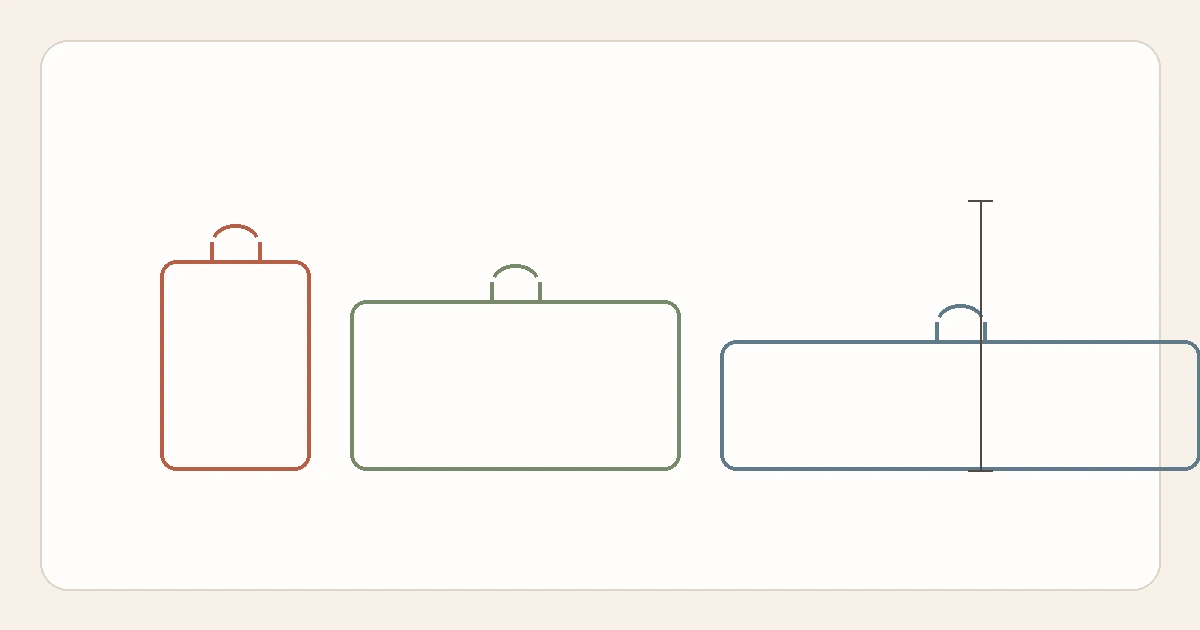
- Measure the specific clearance before final placement. Confirm height, width, and depth against the zone’s real clearance, not an estimate — luggage rarely compresses, so a close guess that is wrong means the bag simply will not fit.
- Only then, consider a new bag or organizer. If your current luggage collection genuinely does not match your usual trip lengths or the clearance you have, that is a legitimate reason to plan a purchase — but measure the zone first so the new piece is chosen to fit it.
Clearance diagram
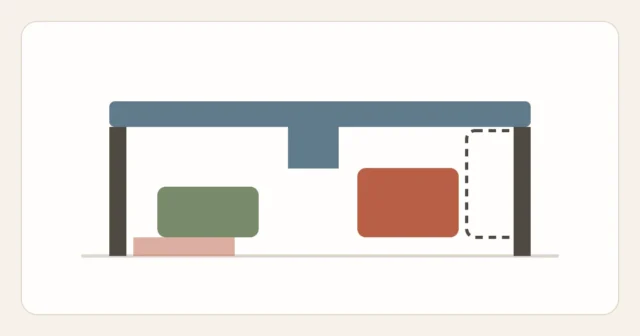
The diagram shows why the most visible frame edge may not set the usable height: a center support, bracket, platform edge, or fabric skirt can sit lower. Measure the lowest point along the entire path the bag must travel, then compare it with the bag’s full exterior height in that orientation.
Option matrix by luggage size and access frequency
| Luggage type | Frequent use | Occasional use | Rare / seasonal use |
|---|---|---|---|
| Carry-on / small case; measure exterior dimensions | Entryway or bedroom closet floor if the route stays clear | Under bed if every support clears | A rated shelf only if the bag can be handled safely |
| Medium checked case; measure wheels and handles | Closet floor, dedicated spot | Under bed only after measuring its stored orientation | Back of a hall or linen closet — see a small linen closet layout |
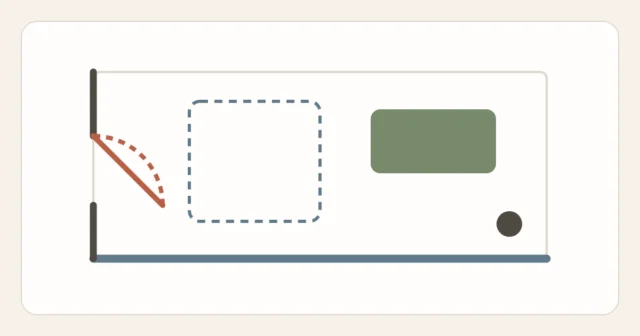
| Large checked case; measure its full footprint | Closet floor if it fits the footprint and door swing | Under bed only if the exact case clears the lowest obstruction | A low, designed storage surface rather than an improvised high perch |
| Soft-sided duffel or garment bag | Hook or entryway shelf | Nested inside a larger hard-shell case | Flat under a bed skirt |
Four zones, matched to real households
1. Under-bed clearance for flat or soft-sided pieces
Under-bed space can provide a large horizontal footprint without using another wall, but only the measured route determines whether a bag fits. A soft-sided duffel may flex while a hard-shell case will not; measure both the opening and any lower obstruction deeper under the frame. Use only a clean, dry cover or storage method compatible with the luggage maker’s care instructions. If the bed has a solid platform base, a center support, or a skirt, use the full under-bed measurement method and measure at the lowest point rather than using mattress height as a proxy.
2. Closet floor for your most-used bag
Whatever bag leaves the apartment most often should live at floor level in the closest closet, not stacked behind other luggage. Reaching past three other bags to grab a carry-on defeats the point of assigning it a spot at all.
3. Above-wardrobe storage for light, rarely used pieces only
Use a high shelf only when it is designed and rated for the load and the bag can be placed and retrieved without an awkward overhead lift. Do not climb on furniture. If the proposed surface is the top of a wardrobe or cabinet, follow that furniture manufacturer’s placement, loading, and anchoring instructions; adding luggage to an unsecured, tip-prone piece is not an acceptable way to create capacity.
4. Nesting to cut the number of zones you need
A small duffel packed with packing cubes or off-season accessories can sit inside a larger suitcase, and a garment bag can fold flat against a closet wall. This is the fastest way to go from needing three storage spots to needing one, without buying anything. For more on reclaiming space this way across other categories, see organizing a small apartment without buying more bins.
What not to buy or change yet
- Do not buy a luggage rack or shelving insert before confirming the clearance a bag actually needs; many racks assume more vertical space than a small closet has.
- Do not buy compression bags or bins to solve a problem that retiring a duplicate suitcase would solve for free.
- Do not mount an over-door luggage hook or rod without checking the door’s swing clearance and weight rating from the manufacturer first — see entryway storage when you have no closet for that check.
- Do not store luggage in a way that blocks a window, vent, outlet, or the room’s main walking path, even temporarily.
A repeatable reset routine
- After each trip: return the bag to its assigned zone the same day you unpack, rather than leaving it staged near the door.
- Twice a year: re-check whether the frequent/occasional split still matches how you actually travel, and swap zones if it has changed.
- When you retire a bag: free its zone immediately rather than letting a replacement bag default to wherever there is space.
FAQ
Is under-bed storage bad for luggage?
It depends on the bag’s care instructions and the actual environment. Do not use the zone if it is damp, exposed to a heat source, affected by pests, or likely to transfer dirt or moisture to the luggage. Clean and dry the bag before storage, use a cover only if its manufacturer permits one, and leave enough clearance to remove the bag without scraping the case or frame.
What if I do not have a closet at all?
Measure under-bed clearance, freestanding storage designed for the load, and any safe entryway footprint before deciding. Some homes will have no suitable hidden zone, so the practical answer may be reducing the collection or keeping a frequently used bag visible without blocking the route. See entryway storage when you have no closet for layouts that do not assume a closet exists.
Should I keep luggage tags and packing cubes with the bag or separately?
Keep small accessories nested inside the bag when the materials and care instructions allow it. Add a separate accessory zone only when visibility, moisture, or the way the bag is packed makes nesting impractical.
How many suitcases does a typical household actually need?
This varies by household size and travel frequency, and there is no universal number worth stating here; the more useful test is whether every bag you keep has a clear, currently used purpose in the last year or two. A single traveler with one regular trip length may only need one carry-on and one medium bag, while a family that mixes short trips and longer vacations may reasonably keep a small set across two or three sizes. What matters for this guide is that each kept bag has an assigned zone and a frequency label, not a specific target count.
Method notes
This guide applies the Start Here method guide to a single category: measure the real clearance, sort by frequency of use, reduce duplicates before assigning space, and recheck the plan when your bags or your travel habits change. It intentionally avoids recommending a specific luggage rack, bin, or organizer product. For the same measurement-led approach applied to other categories, browse Small-Space Storage, and for vertical clearance elsewhere in a small room, see using vertical storage without crowding a room.
Sources
- U.S. Consumer Product Safety Commission, Anchor It! furniture and TV tip-over prevention guidance — cpsc.gov/Safety-Education/Safety-Education-Centers/AnchorItgov
- U.S. Consumer Product Safety Commission, Home Safety Checklist guidance for reaching high shelves — cpsc.gov/s3fs-public/701.pdf
- Command™ Brand (3M), model-specific hook application instructions — command.com/3M/en_US/command/how-to-use/all-other-hooks
- Command™ Brand (3M), product-specific weight-limit guide — command.com/3M/en_US/command/how-to-use/product-weight-limits