What this guide covers
- Quick plan
- Measure and check before you buy anything
- Constraints table
- The decision process, in order
- Counter-use zoning card
- The decision rule for what earns permanent counter space
- Daily reset sequence
- An overflow / temporary-landing method
- What not to buy or change yet
- A repeatable weekly check
- FAQ
- Method notes
- Sources
A clear counter is not about owning fewer things; it is about giving each part of the counter a real job — prep, cooking support, a landing spot, maybe a beverage station — and running a short reset at the end of each day so nothing quietly becomes permanent by accident. This works in a small kitchen without demanding a minimalist look, since the “clear” part is the daily reset, not an empty counter at all times.
Quick plan
- Map your counter into zones based on what you actually do there.
- Decide, as a household, what actually earns permanent counter space.
- Give temporary clutter one landing spot instead of letting it spread.
- Run a short reset sequence at the end of each day.
- Keep appliance placement and clearances specific to your own appliance’s manual.
Measure and check before you buy anything
Constraints table
| Zone | Typical space | Access needed | Appliance clearance | Added cost | Use frequency |
|---|---|---|---|---|---|
| Preparation zone | Widest clear run, usually near the sink or main workspace | Daily | None, unless a small appliance is also staged here temporarily | $0 | High |
| Cooking support zone | Adjacent to the stove, sized to hold utensils and a cutting board mid-task | Daily during cooking | Follow the stove or range manual’s own clearance guidance | $0 | High |
| Beverage or breakfast zone (if genuinely used) | Small footprint near an outlet | Daily to occasional | Follow each appliance’s own manual for clearance and cord routing | $0, unless a new appliance is added | Depends on household routine |
| Temporary landing zone | A small, clearly bounded spot, such as a tray or one counter section | Daily | None | $0 | High, by design |
The decision process, in order
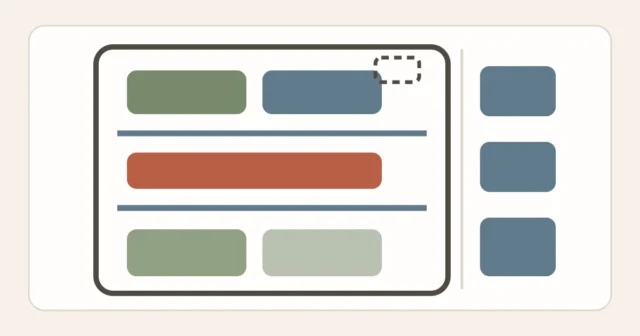
- Map your counter into zones based on real, recurring use. Common zones are preparation, cooking support, a beverage or breakfast station if genuinely used daily, a temporary landing spot, and a small cleaning/reset zone near the sink. Skip any zone your household does not actually use — a beverage zone is not mandatory if no one in the household needs one.
- Decide as a household what earns permanent counter space. Rather than an arbitrary number of items, use a rule such as “used most days” or “too heavy or awkward to put away and take out daily” — and treat that as your household’s own chosen cap, not a universal rule.
- Assign a temporary landing zone for everything else. Mail, keys, a bag, or an item mid-errand needs somewhere to land that is not “wherever there is space.” A tray or a single bounded section works well because it makes overflow visible and easy to clear.
- Confirm appliance placement against each appliance’s own manual. Check the specified clearance around vents and the cord routing, and place appliances so their manual’s clearance is met rather than estimating.
- Run the daily reset sequence below. This is what actually keeps the counter workable day to day — the zoning only sets the plan; the reset is what executes it.
- Only then, consider a caddy, tray, or organizer. If a specific zone still does not stay clear after a few weeks of the reset routine, that is useful information about where the plan needs adjusting, not necessarily a reason to buy something.
Counter-use zoning card
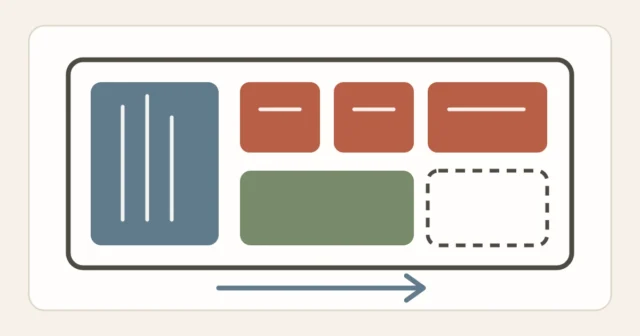
Each section of the counter is assigned one job. The temporary landing zone is deliberately small — its size is the household’s decision about how much overflow is allowed before the daily reset clears it.
The decision rule for what earns permanent counter space
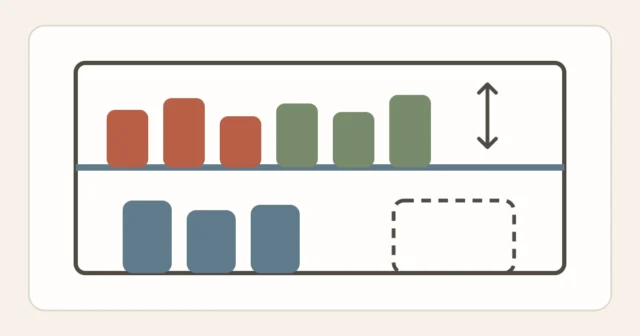
Rather than a fixed item count, use a two-part test your household agrees on: is the item used most days, and is it genuinely harder to store and retrieve daily than to leave out? An item that passes both earns a spot in its zone. An item that only passes one — used often but easy to put away, or rarely used but bulky — is a better candidate for cabinet storage elsewhere in the kitchen, placed by the same frequency-and-reach logic described in Kitchen Organization.
Daily reset sequence
- Clear the temporary landing zone first. Put away, file, or relocate anything that has been sitting there, rather than letting it accumulate into the next day.
- Return cooking-support items to their zone or their cabinet. A cutting board or utensil used earlier goes back to its assigned spot, not wherever it was set down.
- Wipe the preparation and cooking-support zones. This is also a natural moment to notice anything that has drifted into a zone it does not belong in.
- Check the beverage or breakfast zone, if you have one. Return anything used earlier and confirm nothing is blocking the outlet or the appliance’s own clearance.
- Do a final one-glance check of the whole counter. This step takes seconds and is what actually prevents slow drift back toward a fully cluttered counter.
An overflow / temporary-landing method
Choose one bounded object or section — a tray, a shallow basket, or a marked-off end of the counter — and treat anything placed there as temporary by definition. The method only works if the zone is small enough that it visibly fills up; a landing zone the size of the whole counter defeats the purpose. When the tray fills, that is the trigger for a reset, not a signal to find it more room. If the same category of item lands there every day — mail, for instance — that is a signal the item needs its own assigned zone elsewhere in the kitchen or entryway, rather than continuing to pass through the landing spot indefinitely.
What not to buy or change yet
- Do not buy a large capacity storage caddy for counter items before testing whether the zoning and daily reset alone solve the clutter.
- Do not add a new small appliance to a zone without first confirming its clearance against that appliance’s own manual.
- Do not assume a strict “only three items on the counter” rule applies to every household; set a rule that reflects your own kitchen and cooking habits, and treat it as your household’s choice rather than a universal standard.
- Do not improvise a permanent appliance position when the cord, venting, or clearance is uncertain; use the exact model’s manufacturer instructions to decide whether that location is suitable.
A repeatable weekly check
- Weekly: confirm the zoning still matches what you actually use — cooking habits and small-appliance use shift more often than most households expect.
- Monthly: re-apply the two-part earns-a-spot test to anything that has been sitting out for a while, and relocate anything that no longer passes it.
- After buying a new appliance: re-check the zoning and the appliance’s own clearance requirements before finding it a permanent spot.
FAQ
Is it wrong to keep a stand mixer or coffee maker out permanently?
Not inherently — if it passes the two-part test (used most days, and harder to store daily than to leave out), a permanent spot is a reasonable choice. The goal is a deliberate decision, not an empty counter for its own sake.
What if the household disagrees about what earns counter space?
Apply the same two questions to the disputed item together and let the answers settle it; if it is genuinely used most days by even one household member, that often resolves the disagreement faster than a debate about aesthetics. Writing the household’s chosen rule down somewhere visible, even informally, also helps future disagreements resolve faster than relitigating the question each time.
How long should the daily reset actually take?
Keep the reset short enough that your household can repeat it consistently. If it regularly feels like a full organizing session rather than a quick return-to-zone pass, review what is accumulating and whether the landing or preparation zones still match real use instead of forcing a longer routine every night.
Should I have a “nothing stays out” rule for small appliances?
Only if that genuinely fits your household’s cooking habits; forcing daily-used appliances into a cabinet every single day often makes them get used less, not the kitchen more organized. Match the rule to real behavior rather than an aesthetic ideal.
Method notes
This guide applies the Start Here method guide to the counter: define zones by actual use, decide what earns permanent space, and run a short reset rather than aiming for a permanently empty surface. It avoids invented appliance clearances and item counts. Use small-fridge zones and grocery landing sequence when groceries are the recurring landing problem; browse Kitchen Organization for other kitchen zones or organizing a small apartment without buying more bins for the same measure-first approach elsewhere.
Sources
This article describes a household organizing method and does not make a specific appliance-clearance, electrical-safety, or manufacturer claim that requires an external citation; readers are directed to their own appliance’s manufacturer documentation for clearance and safety specifications rather than a number cited here.