What this guide covers
Whether a small home works better with one portable cleaning caddy or a few small zone-specific supply spots depends on what you actually clean with, how far apart your rooms are, and how much storage each room already has — not a fixed rule. Audit what you actually use before choosing either system, and keep every product in its original, labeled container regardless of which layout you pick.
Quick plan
- Inventory the products you actually use before choosing a system.
- Compare one portable caddy against small zone-specific supplies for your actual layout.
- Keep every product in its original, labeled container either way.
- Set a capacity rule based on your real recurring products, not a generic list.
- Never assume two products are compatible just because they share a caddy.
Measure and check before you buy anything
Constraints table
| Factor | Favors one caddy | Favors zone-specific supplies |
|---|---|---|
| Room distance | Rooms are close together, one trip covers most of the home | Rooms are far apart or on different levels |
| Storage availability | No single room has spare storage for its own supplies | Each zone already has a small, unused spot to hold a few items |
| Carrying convenience | You are comfortable carrying one loaded caddy through the whole home | Carrying one caddy everywhere feels like a chore you skip |
| Product overlap | The same few products are used in most rooms | Different rooms genuinely need different products |
| Household access | One person usually does most of the cleaning | Multiple household members clean different rooms independently |
The decision process, in order
- Inventory what you actually use. List the products that appear in your cleaning routine over a typical few weeks — not a generic “must-have” list, but what is actually in your home and actually gets used.
- Check each product’s own storage requirements. Some labels specify storage away from heat, direct sun, or freezing temperatures; a caddy that regularly sits in a hot car trunk or a freezing entryway may not suit every product you listed.
- Compare the two layouts against your real rooms. Use the comparison table below with your own room distances and storage availability, rather than assuming one approach is universally better.
- Set a capacity rule before you buy a caddy or zone containers. Base the rule on your actual inventory count, not a round number — if your list has six products, a caddy or zone spot sized for six, with a little room, is more useful than one sized for an arbitrary “essentials” list.
- Assign a single storage spot for the caddy, or for each zone’s supplies. Whichever system you choose, give it one consistent home so putting things away is as easy as taking them out.
- Only then, buy the caddy or containers. Measure the exact spot and the exact product count first, so what you buy fits both.
One-caddy versus zone-caddy comparison
| System | Best fit | Main trade-off | Typical added cost |
|---|---|---|---|
| One portable caddy | Small homes with rooms close together and mostly overlapping product needs | Convenient to store in one place, but every cleaning session starts with carrying it through the home | Low — one container plus your existing products |
| Zone-specific supplies | Homes with rooms far apart, on different levels, or with genuinely different product needs per room | Nothing to carry, but requires small storage in every zone and a bit more duplication | Low to moderate — small containers for each zone, and possibly duplicate products |
| Hybrid: a small caddy plus one or two zone-specific items | Homes where most cleaning is general but one room (often the bathroom) has its own recurring needs | Balances carrying convenience with not hauling bathroom-only products elsewhere | Low — a small caddy plus a couple of zone-specific items |
Route and zone diagram
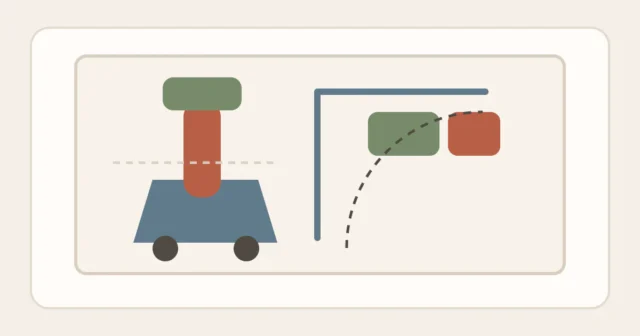
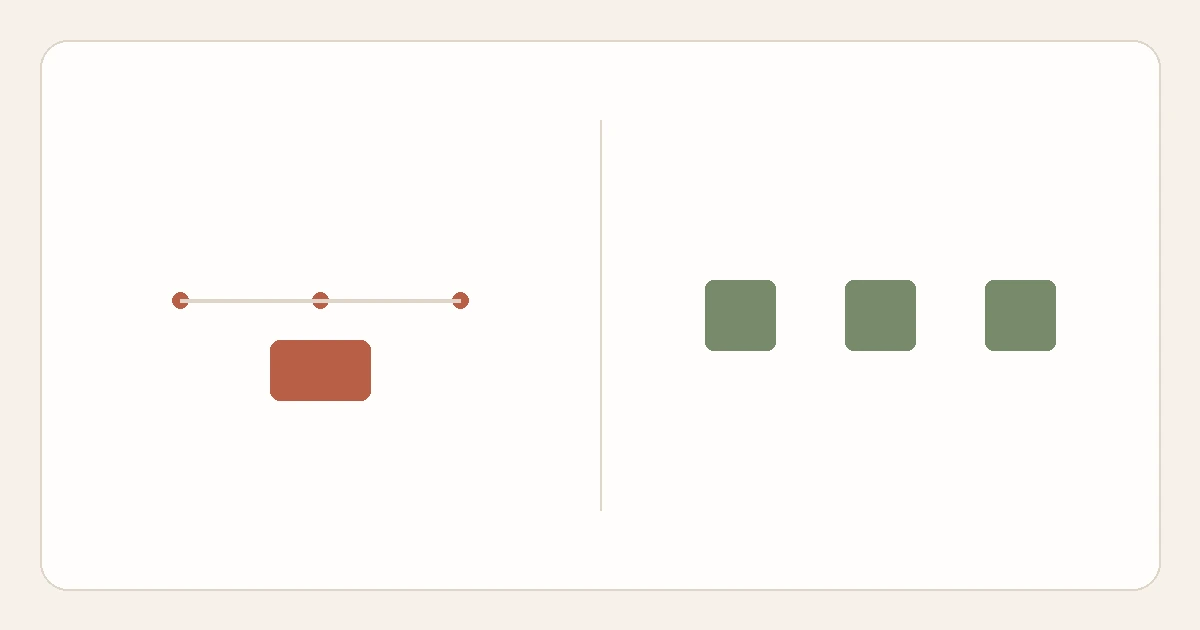
The one-caddy layout centers on a repeated route between rooms; the zone layout trades that route for a small, duplicated supply spot in each room. Match the choice to your own room distances rather than a general preference.
Inventory worksheet
This is a fill-in worksheet, following the same audit-before-you-store logic used for organizing food containers and lids. List each product you actually use, then use its own label to fill in the storage column — do not guess.
| Product | Rooms it is used in | Label storage notes | Caddy or zone-specific? |
|---|---|---|---|
| Example entry: your most-used labeled cleaner | Record the rooms where you actually use it | Copy the exact storage wording from that product’s own label | Choose caddy or zone-specific only after checking the label and route |
| Record your own product | Note every room where you actually use it | Copy the storage line from that product’s own label | Caddy if used in multiple rooms; zone-specific if used in one |
| Record your own product | Note every room where you actually use it | Copy the storage line from that product’s own label | Caddy if used in multiple rooms; zone-specific if used in one |
| Record your own product | Note every room where you actually use it | Copy the storage line from that product’s own label | Caddy if used in multiple rooms; zone-specific if used in one |
A realistic capacity rule
Set your caddy or zone capacity to match your actual inventory count from the worksheet above, not a generic shopping list. A household that regularly uses four products needs a caddy or zone sized for four, with a little room to spare — not the eight-to-ten-slot caddies sized for a much larger routine. If your inventory genuinely grows, revisit the capacity then rather than sizing for a hypothetical future list today.
What not to buy or change yet
- Do not buy a large multi-compartment caddy sized for a generic “essentials” list before your own inventory worksheet tells you how many products you actually rotate.
- Do not decant any product into a smaller travel-sized or unlabeled container unless that exact product’s own label or manufacturer instructions explicitly allow it.
- Do not combine leftover products into a single container to save space, even if they seem similar; this guide does not recommend mixing cleaning products under any circumstance.
- Do not assume a caddy makes two products compatible just because they now sit next to each other; incompatible products should stay separated regardless of the storage system.
A repeatable reset routine
- After each cleaning session: return the caddy or each zone’s supplies to their assigned spot immediately, rather than leaving them out for the next session.
- Monthly or seasonally: re-check the inventory worksheet against what you actually used recently, and retire anything that has not been used since the last check.
- Whenever you buy a new product: decide caddy or zone-specific using the same table above, rather than defaulting to wherever there is space.
FAQ
Can I use small travel bottles to save space in a caddy?
Check the product’s own label or manufacturer instructions before transferring anything. For household hazardous products, EPA guidance says to keep them in their original containers and never remove labels; do not move those products into travel bottles or food/beverage containers.
What if different household members prefer different systems?
A hybrid approach often works — one shared caddy for commonly used products, plus a small zone-specific spot for whoever cleans a particular room most often. Match the split to who actually does the cleaning in each area.
Is it fine to store the caddy in a kitchen cabinet?
Yes, as long as the cabinet has a genuine spot for it and the stored products’ labels allow that location. Use the same frequency-and-reach logic you would use for any other cabinet zone.
How do I know if my inventory list is complete?
Track your actual cleaning sessions for a couple of weeks and note every product you reach for. The goal is to build the inventory from real use rather than a guessed essentials list.
Method notes
This guide applies the Start Here method guide to cleaning supplies specifically: inventory what you actually use, compare the two layouts against your real rooms, and size the system to your actual count rather than a generic list. It deliberately avoids recommending specific products or a fixed “essentials” list, since every household’s routine is different. Pair the portable supplies with measured vacuum-cleaner storage, and browse Laundry & Cleaning for related storage decisions.
Sources
- U.S. Environmental Protection Agency, household hazardous waste storage guidance (original containers and labeling) — epa.gov/hw/household-hazardous-waste-hhw
- Occupational Safety and Health Administration and NIOSH, hazard information on mixing cleaning products containing bleach and ammonia — osha.gov/sites/default/files/publications/OSHA3512.pdf