What this guide covers
- Record the vacuum you actually own
- Measure the parking position and retrieval path
- Map the storage zone in elevation
- Compare four realistic parking spots
- Plan the cord and charging arrangement
- Give attachments one bounded home
- Build a return-to-park routine
- What not to buy yet
- FAQ
- Method notes
- Sources
Vacuum cleaner storage in a small apartment is easier to solve when the machine is treated as a parked tool, not as an object that must disappear. Measure the vacuum in its real storage position, include the handle, hose, floor head, cord or charger, and leave enough hand room to remove it without unloading a closet. The best spot is usually the smallest accessible zone that follows the exact model’s storage and charging instructions.
Record the vacuum you actually own
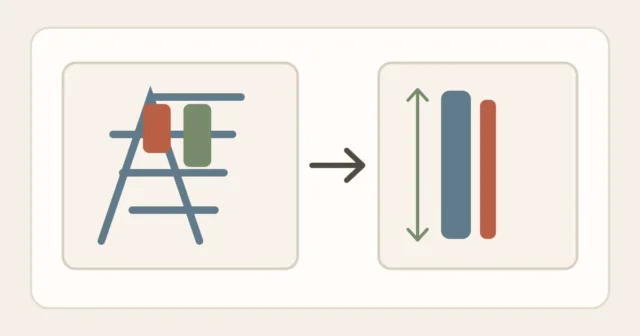
Do not start with a photograph of a narrow cabinet. Stand the vacuum as it is after a normal clean and list every loose part that needs a home. An upright may be one tall unit with a wrapped cord. A canister has a body, wand, hose and floor head that may occupy different shapes. A cordless stick may separate into a handheld unit and long tube, but its charging arrangement can determine where it is allowed to park.
- Identify the model and locate its current owner or installation manual.
- List the cleaner head, tube, hose, charging cable and every attachment still used.
- Empty or clean only as directed, then let washable parts dry for the stated time before reassembly.
- Choose a parking orientation the machine can hold safely without leaning into a doorway.
- Keep doors, windows and the household escape route clear.
Measure the parking position and retrieval path
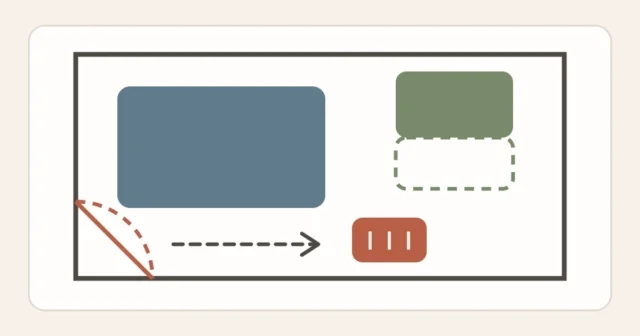
Measure the widest and tallest points while the vacuum is in the position you intend to store it. The cleaner head often projects farther than the handle, and a hose loop may be wider than the canister. Add hand space where you grip the machine. Then test the route between storage and the first floor area you usually clean. A compact spot is not useful if a door, laundry basket or shelf must be moved every time.
| Measurement | Include | Why it matters |
|---|---|---|
| Parked height | Handle, tube, dock and cable bend | Prevents the top from striking a shelf or hanging rail |
| Floor footprint | Cleaner head, wheels, canister and stable stance | Shows the floor area that must stay empty |
| Working width | Hose loop, cord wrap and side attachments | Prevents snagging on clothes, hinges or stored supplies |
| Grip clearance | Hand space above and beside the release point | Makes removal possible without unloading the zone |
| Door movement | Full closet, cabinet and room-door swing | Keeps the parked machine out of the closing path |
| Power route | Outlet, charger body and relaxed cable path | Avoids routing a charging lead through traffic or a door |
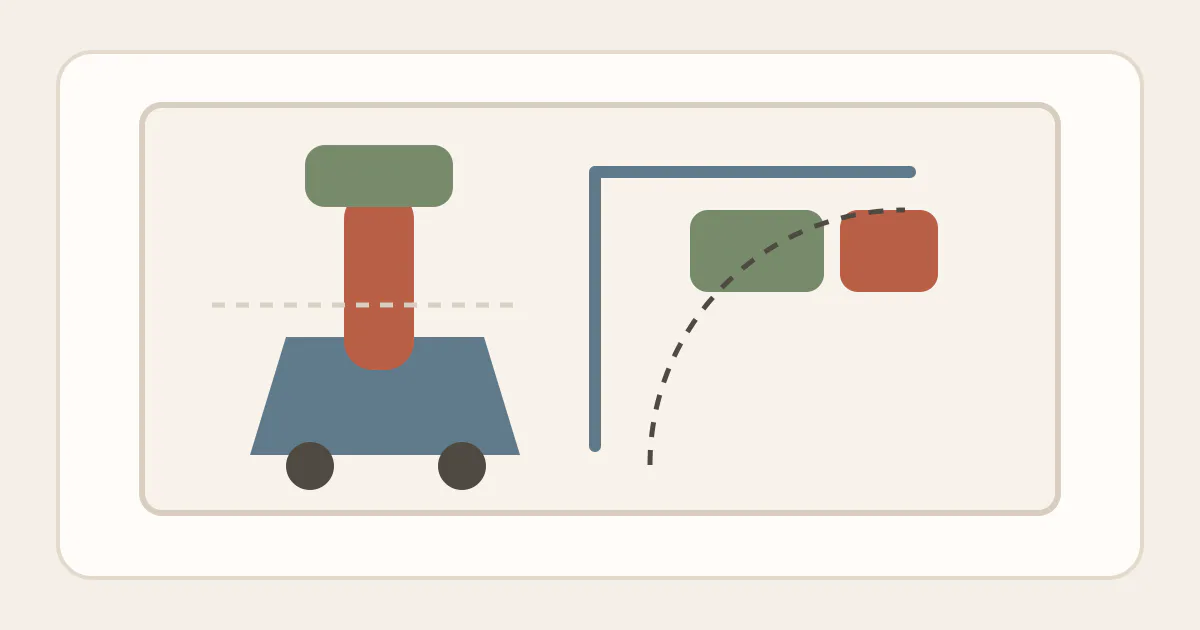
Map the storage zone in elevation
The drawing separates the machine footprint, grip area, attachments and door movement. It is a planning example, not a mounting or clearance specification; use the actual model, closet and door.
Compare four realistic parking spots
Inside a coat or utility closet
A closet can hide the machine without adding hardware, but jackets, shoes and supplies can invade the same footprint. Mark the vacuum’s floor rectangle with removable painter’s tape and use the closet normally for several days. If other items repeatedly land in the rectangle, move those items or reject the spot. Do not crowd the vacuum against household chemicals; keep those organized according to safe cleaning-product storage.
Beside a wardrobe or cabinet
A narrow outside edge can work for a stable upright or folded stick vacuum when it stays outside the walking line and away from a door. Record the baseboard projection and the furniture’s actual depth. A gap that appears wide at shoulder height may be narrowed by trim or a projecting foot near the floor. Do not wedge the machine where it can fall when the adjacent door opens.
Behind an interior door
This is only useful when the door can reach its normal open position without striking the vacuum, cord or hose. Test the door from both sides and consider how guests use it. Never use a location that blocks an exit or makes a required window inaccessible; the U.S. Fire Administration advises keeping doors and windows in a home escape plan unblocked.
On a manufacturer-specified dock
A wall dock may combine storage and charging, but it is a model-specific installation. For example, Dyson’s published manuals show docks fixed with screws and instruct installers to consider hidden pipes, cables and ductwork. That does not make the same method correct for another vacuum, wall, lease or fastener. Follow the exact manual, confirm written permission where needed and use the checks in rental-friendly wall-storage checks. A stable floor location is the fallback when mounting conditions are unresolved.
Plan the cord and charging arrangement
For a corded machine, use its built-in wrap or the method shown in its manual. Keep the plug visible enough to inspect and avoid creating a tight bend at the cord entry. Do not run a loose cord across a walkway, under a closing door or around a sharp corner. If the cable or plug is damaged, stop using the machine and follow the manufacturer or qualified service route rather than hiding the damage inside storage.
For a rechargeable model, check the required charging location, temperature range, ventilation, dock position and charger specified for that unit. The outlet should be reachable without an extension cord unless the manufacturer explicitly allows the arrangement. Keep charging components away from water, heat and the knock zone of hampers or shoes. A nearby outlet is not permission to drill or to place a dock on an unknown wall.
Give attachments one bounded home
Keep only attachments that fit the model and a cleaning task still performed. Place them in one shallow tray, labeled pouch or shelf box near the parked machine. Store a frequently used crevice tool at the front and rare tools behind it. A tool clipped loosely to the machine can fall during retrieval; use only the model’s intended attachment points.
If small brushes are used in different zones, coordinate them with the small-home cleaning caddy instead of buying duplicate sets immediately. One labeled attachment pouch can travel with the caddy, while the vacuum remains parked. Review unmatched parts before discarding them because a piece that looks redundant may be required for safe assembly or filtration.
Build a return-to-park routine
- Switch off and unplug or return the machine as directed by its manual.
- Remove visible hair or debris only through the specified maintenance steps.
- Empty the bin or replace the bag when required; do not force a full unit into the closet.
- Return the cord, hose and attachments to their assigned positions.
- Place the machine fully inside its marked footprint and confirm the door and route remain clear.
Attach this sequence to the room pass in the 15-minute evening reset. The storage system is succeeding when returning the vacuum takes less effort than leaving it out. If the same attachment remains on the floor or the cord never reaches its wrap, change the storage position before adding another organizer.
What not to buy yet
- Do not order a slim cabinet from the vacuum’s advertised width alone; measure the fully parked configuration.
- Do not buy a generic wall bracket before checking the model’s instructions, weight, geometry and approved support method.
- Do not add attachment holders until the useful attachments have been identified.
- Do not conceal a charger in a closed container or improvised enclosure.
- Do not create a second cleaning station when a clearer return routine would solve the problem.
FAQ
Can a vacuum be stored in a bedroom closet?
It can be a practical location if the machine is clean, stable, allowed by its instructions and separated from clothes enough to retrieve it without snagging them. Preserve the closet door movement and the room’s escape route. Test the real routine before adding a cabinet or hanger.
Should a cordless vacuum stay on its charger?
Follow the instructions for the exact model, charger and battery. Charging behavior and storage conditions vary, so a general article cannot replace that guidance. Use only the specified charging equipment and stop if a component is damaged, unusually hot or behaving abnormally.
Can I hang a stick vacuum with adhesive strips?
Do not improvise a mounting method from the vacuum’s weight alone. The dock, wall surface, fastener, leverage and charging cable all matter, and removable adhesive is not automatically approved for that load or surface. Use the manufacturer-specified installation and obtain rental permission where required.
How do I stop vacuum attachments getting lost?
Audit the parts, keep one bounded container beside the machine and label tools by task when their shapes are unclear. Return the tool before the vacuum leaves its parking zone. Avoid distributing attachments across several rooms unless each has a stable, repeated use there.
Method notes
This guide applies the Start Here method to one awkward cleaning tool: inventory the complete object, measure its stable parking position, preserve door and escape movement, then test retrieval before buying hardware. It complements the portable small-home cleaning caddy and the broader Laundry & Cleaning system without endorsing a vacuum, bracket or universal charging arrangement.
Sources
- U.S. Fire Administration, home fire escape planning and keeping doors and windows unblocked — usfa.fema.gov/prevention/home-fires/prepare-for-fire/home-fire-escape-plans
- Dyson, official cordless vacuum user manual with charging-dock installation and filter-drying instructions — dyson.com/content/dam/dyson/maintenance/user-guides/en_US/vacuumcleaners/cordlessstickvacuums/sv47/447261-01.pdf
- Dyson, official operating manual covering cord routing, suitable wall hardware and concealed-service checks — dyson.com/medialibrary/Files/Dyson/Support/downloads/US/Floorcare/manuals/DC59_Animal_Manual.pdf