What this guide covers
Before you hang anything on a rented wall, work through four checks in order: what your written lease actually allows, what your wall surface actually is, what the specific item and mounting hardware’s own instructions require, and whether the location works for daily use and for removal later. If any one of those checks comes back uncertain, the correct answer is to wait — “do not hang it yet” is a legitimate outcome of this guide, not a failure to find an answer.
Quick plan
- Check your written lease terms before considering any wall attachment.
- Identify your actual wall surface rather than assuming it.
- Match the item’s own instructions to that specific surface, not a general rule.
- Consider whether existing furniture could solve the same problem first.
- If any check is uncertain, wait rather than proceed.
Check before buying or changing anything
Constraints table
| Factor | What to check | Who or what decides | Reversibility |
|---|---|---|---|
| Lease terms | Wording about holes, attachments, or alterations | Your written lease and, where it is silent, your property manager or landlord directly | Varies — ask before assuming |
| Wall/surface type | Drywall, plaster, masonry, tile, or another material | The wall itself; confirm rather than guess | Depends on the mounting method used |
| Item and mounting hardware | The manufacturer’s stated surface compatibility and installation instructions | The product’s own instructions, not a general rule | Depends on the specific product |
| Location and access | Reach, door swing, sightlines, and whether it sits over a bed or seating area | Your own measurements | N/A — this is a placement decision, not a material one |
The decision process, in order
- Start with your lease, in writing. If your lease clearly allows or clearly prohibits wall attachments, you have your answer for that category. If it is silent, ask your landlord or property manager directly rather than assuming either way.
- Identify your wall surface before choosing any product. The same item and mounting hardware can be appropriate for one wall type and inappropriate for another; confirming the surface comes before comparing products, not after.
- Read the exact mounting hardware’s own instructions. Follow its stated surface compatibility, weight guidance, and installation steps exactly — this guide does not provide a universal weight limit or anchor capacity, because those figures are specific to the exact product and wall.
- Ask whether a non-wall alternative solves the same problem. A shelf unit, a repositioned bookcase, or reassigning an existing piece of furniture — see organizing a small apartment without buying more bins — sometimes solves the same storage need without touching the wall at all.
- Check the location for daily use and for removal. Confirm the spot is reachable, does not block a sightline or doorway, and — importantly — is not positioned over a bed or seating area where a failure could fall on someone.
- If any step above is uncertain, stop and wait. Gather the missing information — ask your landlord or property manager, check the product’s instructions again, or confirm the surface through reliable property information or qualified guidance — before attaching anything.
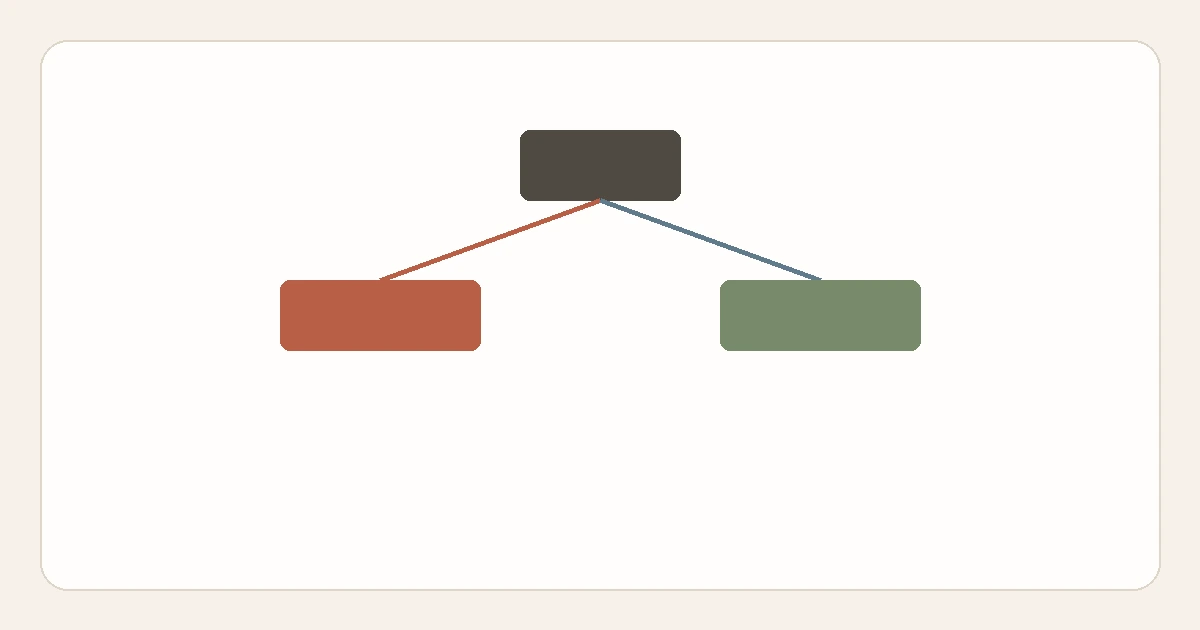
Lease, surface, and load decision tree
Any “no” or “unclear” branch leads to gathering more information, not to proceeding anyway. Only one path — lease allows it, surface confirmed, and the exact hardware’s own instructions match both the surface and the location — ends in proceeding.
Location worksheet
This is a fill-in worksheet. Complete one row per spot you are considering before comparing products.
| Location | Confirmed wall type | Over a bed or seating area? | Reachable and unobstructed? |
|---|---|---|---|
| Example: hallway wall | Wall type confirmed from property documentation or direct property guidance | No | Yes — clear of the doorway swing |
| Record your candidate spot | Note how you confirmed it, not an assumption | Note yes or no plainly | Note any doorway, sightline, or reach issue |
| Record your candidate spot | Note how you confirmed it, not an assumption | Note yes or no plainly | Note any doorway, sightline, or reach issue |
Options, from least to most permanent
1. Reassign existing furniture instead of using the wall
A bookcase, a cart, or a repositioned shelf unit can sometimes absorb the same items a wall shelf would hold, without touching the wall at all. See organizing a small apartment without buying more bins for reassigning furniture you already own before adding anything new.
2. Purpose-designed freestanding storage
A purpose-designed freestanding unit can avoid the wall-attachment question, but it still needs to be stable in the location and used exactly as its manufacturer describes. Some tall furniture requires anchoring as part of safe use; if the product calls for anchoring, that requirement brings the lease and wall-surface checks back into the decision rather than making them optional.
3. Removable, adhesive, or tension-mounted hardware matched to your confirmed surface
If your lease allows it and your surface matches the product’s own stated compatibility, adhesive strips or tension-mounted hardware can work — but neither should be described as damage-free or guaranteed to remove cleanly; follow the manufacturer’s instructions for both installation and removal, and expect that results can vary by surface condition and age. See using vertical storage without crowding a room for the broader planning approach to wall space once you have confirmed a location is appropriate.
4. A drilled anchor, only with written permission
If your lease or landlord has given written approval for a drilled attachment, follow the anchor manufacturer’s instructions exactly for your confirmed wall type. This guide does not provide drilling steps, wire or pipe detection guidance, or anchor capacity figures, since those depend on the specific product and the specific wall.
What not to buy or change yet
- Do not buy any wall-mounted item before your lease question and your wall-type identification are both resolved.
- Do not assume an adhesive or tension product that worked on one wall will behave the same on a different surface in the same apartment.
- Do not drill into a wall you have not identified, or where you suspect wiring or plumbing based on a guess rather than confirmed information.
- Do not install anything over a bed or seating area as a default “make use of the space” choice; treat that placement as one to avoid unless there is a specific, confirmed reason it is appropriate.
A repeatable review method
- After installation, within the first week: check that the mount still feels secure and that nothing has shifted, following the product’s own guidance on what to watch for.
- Before you move out or reorganize: review the manufacturer’s removal instructions again rather than assuming removal will be identical to installation.
- Whenever you consider a new wall item: repeat the full decision process above rather than assuming a prior approval or a prior successful install covers a new product or a new spot.
FAQ
My landlord said wall hooks are fine — does that cover everything?
Only what was actually discussed. A verbal approval for small hooks does not necessarily extend to a heavier shelf or a different mounting method; when in doubt, ask specifically about the exact item you are considering.
Is adhesive hardware always safer for a rental than drilling?
Not automatically — “removable” is a description of the mounting method, not a guarantee about your specific wall’s paint, texture, or condition. Match the product’s stated surface compatibility to your actual wall before assuming it is the lower-risk choice.
What if I genuinely cannot tell what my wall is made of?
That is a valid reason to choose a non-wall alternative, such as freestanding or leaning storage, or to ask your landlord or a qualified professional rather than guessing.
Can I reuse anchor holes from a previous tenant?
Do not assume an existing hole is structurally appropriate for a new item; treat any existing hole with the same caution as a new one, since you cannot confirm how it was originally installed.
Method notes
This guide applies the Start Here method guide to wall storage specifically: check the lease, confirm the surface, match the product’s own instructions, and treat “not yet” as a valid outcome when information is missing. It deliberately does not provide a universal weight limit, anchor capacity, or drilling instructions, since all of these are specific to the exact product and wall. When the proposed surface is a moving door, use measuring an over-the-door organizer before buying; for an outdoor zone, see planning storage on a small apartment balcony; and for privacy or light control, use rental-friendly window coverings. Cabinet-based storage can avoid the wall question through creating kitchen cabinet zones in a small kitchen; browse Rental-Friendly Living for more reversible-first decisions.
Sources
- Command™ Brand (3M), official hook and strip application, surface-compatibility, and removal instructions — command.com/3M/en_US/command/how-to-use
- U.S. Consumer Product Safety Commission, Anchor It! furniture and TV tip-over prevention program — cpsc.gov/Safety-Education/Safety-Education-Centers/AnchorItgov