What this guide covers
Declutter one narrow category at a time — mugs, not “the kitchen”; socks, not “the dresser” — and you avoid the full-room floor pile that makes most decluttering attempts stall out. Pick a category small enough to finish in one sitting, set a sorting surface and a stop rule before you start, and return what you keep before opening the next category. The Start Here method guide covers the same measure-and-reduce approach this method is built on.
Quick plan
- Choose one narrow category, not a whole room.
- Set a sorting surface and a stop rule before you start.
- Return what you keep before opening the next category.
- Give uncertain items a dated holding spot instead of a permanent one.
- Use your current storage capacity as evidence before buying bins.
Check before you start
Constraints table
| Element | What to decide first | Why it matters |
|---|---|---|
| Category width | Narrow enough to finish in one sitting — “coffee mugs,” not “the kitchen” | A category too broad is what turns a pass into a full-room floor pile |
| Sorting surface | One table or counter, sized to the category | Keeps the sort contained instead of spreading across multiple rooms |
| Stop rule | A time limit or a completion condition, chosen before starting | Prevents both giving up early and pushing well past a reasonable session |
| Uncertain-item holding spot | A single dated box or bag, separate from keep/move/remove | Avoids permanent limbo without forcing a decision you are not ready to make |
| Destination for kept items | Confirmed before you buy any new container | Existing capacity is the evidence for whether a container is actually needed |
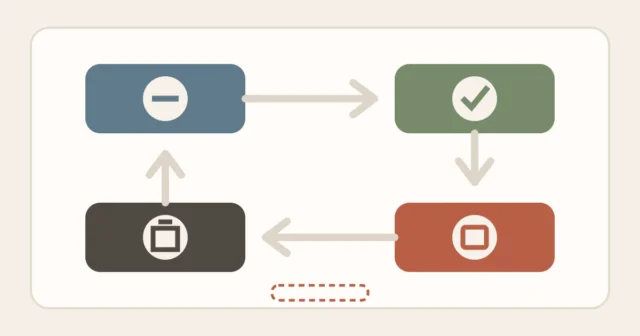
The decision process, in order
- Choose one narrow category. Something you can finish in a single sitting — a drawer’s worth, a shelf’s worth, or one type of item across a room.
- Set the sorting surface and container before starting. Pull everything in the category onto that one surface, not the floor of the whole room.
- Sort into keep, move, remove, and uncertain. Keep is staying in this category’s zone; move belongs somewhere else in the home; remove leaves the home; uncertain goes into a single dated holding spot rather than back into the main pile.
- Return kept items to their zone before opening the next category. This is what keeps the method low-mess — one category is fully closed out before another begins.
- Handle move and remove items on your normal schedule. Donation drop-off, trash day, or relocating an item to its real home — do not let these piles sit and spread while you move on to more categories.
- Only then, consider a container for what you kept. If the kept items still do not fit their space well, that is now based on real, reduced inventory rather than a guess made before sorting.
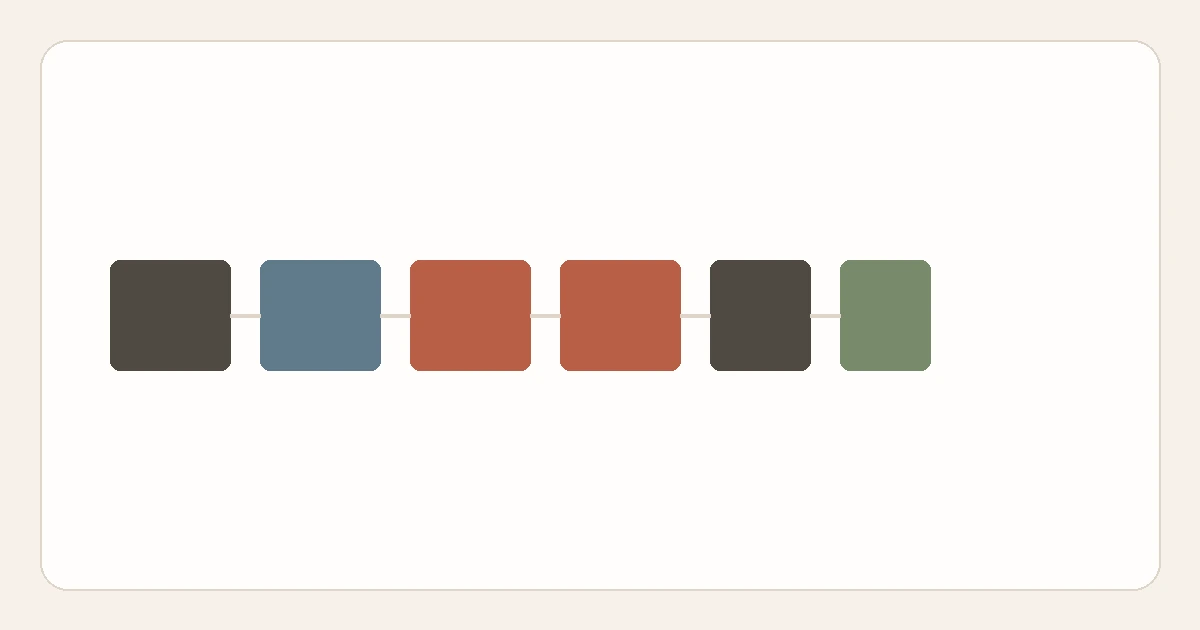
Low-mess category sequence
Each category runs through all six steps before the next one begins — the sequence is what keeps a single pass contained instead of spreading into a full-room mess.
Stop-rules worksheet
This is a fill-in worksheet. Choose your stop rule before starting each category, and note it here so it is decided in advance, not improvised mid-session.
| Category | Stop rule chosen | Uncertain-item holding spot | Session result |
|---|---|---|---|
| Example: coffee mugs | Until the cabinet shelf is fully sorted | A labeled box with a household-chosen review date | Example result: kept 8, moved 0, removed 6, 2 uncertain |
| Record your own category | Time limit or completion condition, chosen first | Note where uncertain items go and when you will revisit them | Fill in after the session, not before |
| Record your own category | Time limit or completion condition, chosen first | Note where uncertain items go and when you will revisit them | Fill in after the session, not before |
One completed example category pass
Here is a hypothetical worked example, not a real household case study. Suppose “coffee mugs” is the narrow category — the same kind of audit-first pass used in organizing a small apartment without buying more bins for other household categories. The sorting surface is a cleared kitchen table and the stop rule is “until the cabinet shelf is fully sorted.” Each mug is placed into keep, move, remove, or one labeled uncertain box. In this example, the owner chooses to remove six chipped or rarely used duplicates, move none, keep eight regularly used mugs, and place two uncertain mugs in the dated box for a household-chosen review date. The kept mugs return to the cabinet before the table is cleared, while the remove group is placed in the household’s normal donation or disposal flow. The point of the example is the sequence: finish one bounded category, close its outgoing piles, then judge whether the existing shelf already has enough capacity before buying an organizer.
What not to buy or change yet
- Do not buy bins, dividers, or organizers before a category has been sorted and its real kept-item count is known.
- Do not open a second category before the first one’s kept items are returned and its remove/move piles are scheduled to leave.
- Do not discard legal, financial, medical, or clearly sentimental documents under a generic decluttering rule; these need their own careful review, separate from a fast category pass.
- Do not discard or donate items belonging to another household member without their agreement.
A repeatable review method
- After each category: confirm the remove and move piles actually left their spot on schedule, rather than lingering as a new kind of clutter.
- On your uncertain box’s review date: make a decision on each item rather than simply restarting the clock on the same box.
- Periodically: use current storage capacity — what actually fits after a category has been reduced — as the evidence for whether any container purchase is genuinely justified, the same audit-first approach used in organizing food containers and lids.
FAQ
How many items should I keep from each category?
This guide does not set a universal item-count limit for any category; the right number depends on your household’s actual use, and the sort itself — keep, move, remove — is meant to surface that number rather than start from one.
Do I have to follow a “one in, one out” rule?
No — this guide does not treat that as a universal requirement. Some households find it useful for specific categories; others do not need it at all. Use it only if it genuinely fits your routine.
What if I open a category and realize it is too big to finish in one sitting?
Split it further — “coffee mugs” instead of “all dishes,” for example — and treat the smaller slice as its own category with its own stop rule, rather than pushing through an oversized pass. Realizing a category is too broad partway through is common and not a sign the method has failed; simply close what you can and treat the rest as a new category next time.
What should I do with items I am still unsure about after the review date?
Make an actual decision — keep, move, or remove — rather than extending the holding period again; a box that keeps getting a new review date is no longer serving its original purpose. If you genuinely cannot decide even at the review point, that hesitation is itself useful information about whether the item matters enough to keep.
Method notes
This guide applies the Start Here method guide to decluttering specifically: narrow the category, decide the surface and stop rule first, sort into clear outcomes, and use real reduced inventory as the evidence for any container purchase. It deliberately avoids universal item-count limits, a forced “one in, one out” rule, and any mental-health claim, since none of these fit every household the same way. For a short daily routine that keeps categories from re-cluttering once sorted, see a 15-minute evening reset; for the same reduce-before-you-buy approach applied elsewhere, see organizing a small apartment without buying more bins, or browse Layouts & Routines for more of this method.
Sources
This article describes a household sorting method and does not make a mental-health, medical, or safety-specific claim that requires an external citation. Clinically significant hoarding situations and decisions about legal, financial, or medical documents are explicitly outside the scope of this generic household sorting method.