What this guide covers
- Quick plan
- Measure and check before you buy anything
- Constraints to check first
- The decision process, in order
- Zone-capacity diagram
- Keep, move, remove decision worksheet
- Four ways to gain space without a new container
- What not to buy or change yet
- A repeatable reset routine
- FAQ
- Method notes
- Sources
A small apartment can feel short on storage when categories have no assigned home or clear limit. Before buying another bin, sort one category at a time into keep, move, or remove, give its destination a realistic capacity, and test the furniture and shelving you already own. Consider a container only after that pass reveals a specific, measured gap.
Quick plan
- Empty one category at a time and sort every item into keep, move, or remove.
- Give every zone a capacity limit before you decide what goes in it.
- Reassign drawers, shelves, and dead space you already own before adding anything.
- Measure the one true gap that remains, if any, before shopping for it.
- Set a weekly reset so the system stays honest instead of quietly overflowing.
Measure and check before you buy anything
Constraints to check first
Every apartment has a different mix of built-in storage, so match the method to what is actually there before assuming a category needs a purchase.
| Zone type | Typical space | Access needed | Surface / lease note | Added cost | Use frequency |
|---|---|---|---|---|---|
| Existing closet shelf | Measure usable width, depth, and height | Daily to weekly | None when shelving remains unchanged | $0 | High |
| Dresser or cabinet drawer | Varies by furniture | Daily | None | $0 | High |
| Under-bed or under-sofa gap | Measure clearance before assigning | Monthly or seasonal | None, unless a bed skirt or frame limits access | $0 | Low |
| Entry surface or hook zone | Wall or door-adjacent | Daily | Lease terms apply if mounting anything to a wall | $0 if reassigned | High |
| High shelf or cabinet top | Above reach | Rarely | None | $0 | Low |
The decision process, in order
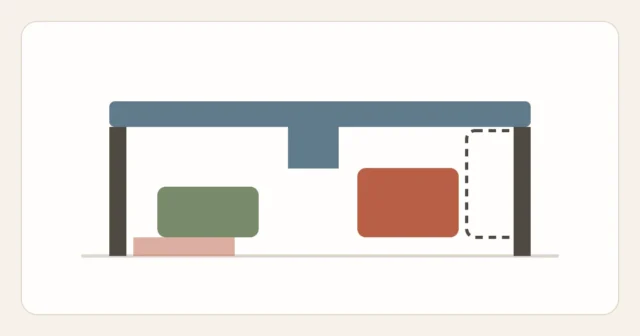
- Rearrange before you reduce. Walk the apartment and note every existing flat surface, drawer, shelf, and gap that is not already doing a job. You may find usable capacity at the back of a closet shelf, the bottom of a coat closet, or beneath a bed frame, but record only space that can remain accessible and does not block a vent, outlet, door, or walking route.
- Sort one category at a time into keep, move, or remove. Pull an entire category — all mugs, all off-season clothing, all cables — into one place. Define “keep” by the category’s real purpose, replacement difficulty, condition, and use in your household rather than a universal recency rule. “Move” means the item belongs in a different zone; “remove” means it can leave through an appropriate sale, donation, recycling, or disposal channel.
- Set a zone capacity before refilling it. Decide how much of a shelf, drawer, or hook row a category is allowed to occupy, and write that number down. A capacity that is never written tends to expand until it forces a purchase; a capacity that is explicit makes the next round of sorting much faster.
- Assign frequency to position. Put daily items in the easiest safe reach for the people who use them and near the activity they support. Less frequent items can move to less convenient zones only when retrieval remains safe and the location suits the item.
- Reassign what you already own. A tray, shoebox, tote bag, or spare drawer may solve a clearly defined storage job without a purchase. Confirm that its dimensions fit the zone, that the material suits the contents, and that it will not hide something you need to see or reach regularly.
- Only then, measure the one real gap. If a specific category still has nowhere to live after steps 1–5, measure that exact space — width, depth, height, and any door or drawer clearance — before considering anything new.
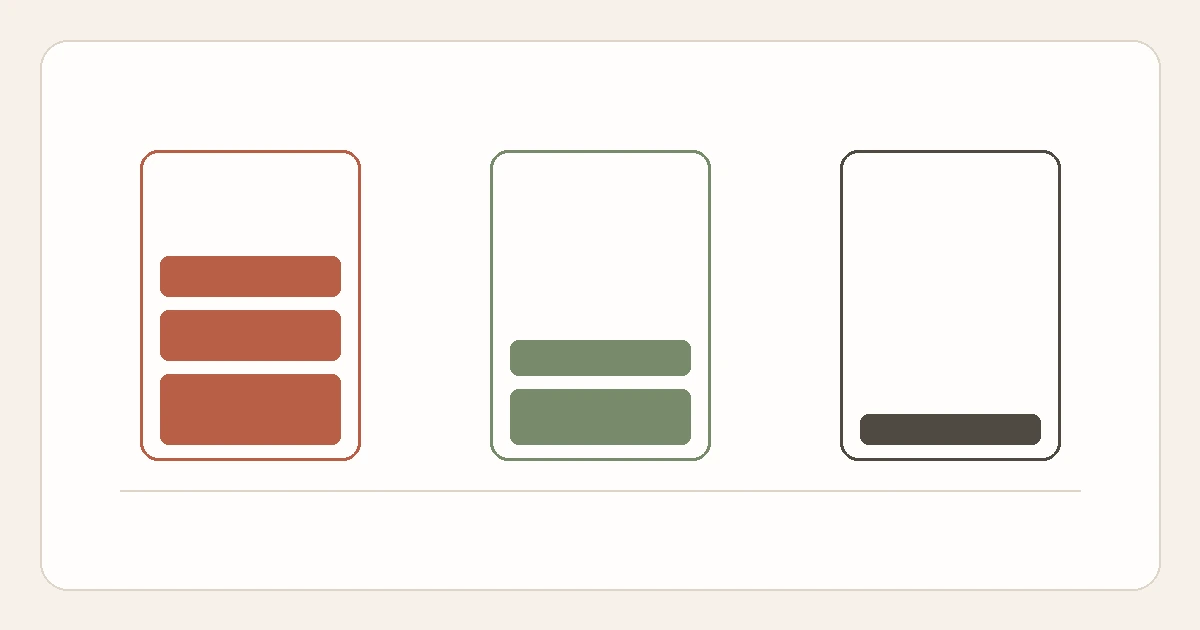
Zone-capacity diagram
Each block represents one category’s share of a zone’s written capacity. If the Keep column would overflow its outline, the capacity is too small for that category, or the category needs a second pass before it is reassigned a home.
Keep, move, remove decision worksheet
Copy this pattern onto paper or a notes app for each category you sort. It separates the decisions a container can otherwise hide: what stays, what moves, what leaves, and how much space the keep group is allowed to occupy.
| Category | Keep count / capacity | Move to | Remove by | Reassigned container already owned |
|---|---|---|---|---|
| Example: mugs | 8 / fits one shelf row | — | Duplicates to donation this week | Existing cabinet shelf |
| Example: books | Fits one bookcase shelf without double-stacking | Current-reference books to the desk zone | Duplicates or finished titles to sell/donate this month | Existing bookcase shelf |
| Example: cleaning cloths | One normal-use rotation + laundry buffer | Daily-use cloths closer to the kitchen or bath | Worn pieces leave through your normal textile-disposal route | Existing drawer or shelf section |
| Example: seasonal accessories | Fits one measured low-frequency zone | Move to confirmed under-bed or upper-shelf clearance | Unused pieces to donation at the end of the season | Existing bag, drawer, or open shelf zone |
Four ways to gain space without a new container
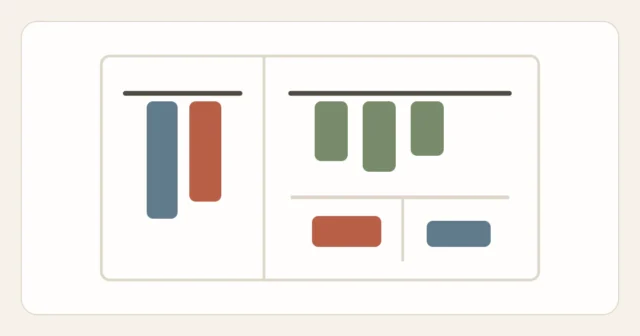
1. Reassign an existing drawer or shelf by frequency, not by furniture type
Instead of “the junk drawer” or “the linen shelf,” assign each drawer and shelf a job based on how often its contents are used. A shallow kitchen drawer near the door is a better home for daily mail and keys than a mixed catch-all drawer across the room, even though nothing new was purchased.
2. Use vertical wall space you are not currently using
Empty wall space above a desk, sofa back, or dresser can absorb books, cookware, or off-season accessories without a floor footprint. See using vertical storage without crowding a room for a full wall-elevation approach, including how to avoid making a small room feel crowded and what load and surface checks apply before mounting anything.
3. Reclaim under-bed and under-furniture clearance for low-frequency categories
Low-frequency items — off-season bedding, spare linens, luggage — belong in the hardest-to-reach zones. Measure the actual clearance under your bed frame or sofa before assigning anything to it; a frame’s cross-bar or a sofa’s skirt can cut usable height well below what it looks like. Guidance on where to store luggage in a small apartment covers this clearance check in more depth.
4. Consolidate entry and closet overflow into one reassigned zone
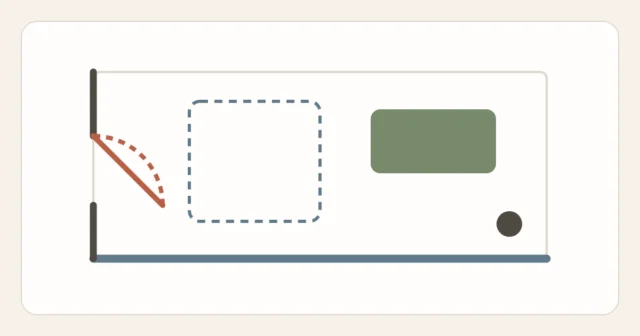
Entryway clutter may be a category that never received a practical home. If entryway storage when you have no closet or building a small linen closet layout describes a zone closer to where those items are used, moving the category there — with storage you already own — can address the route the items actually follow instead of placing another bin where they currently collect.
Combining approaches in one pass
You can combine these methods rather than choosing only one. A studio might reassign a kitchen drawer for mail, use a measured wall zone near the desk for books, and place off-season clothing in confirmed under-bed clearance — three separate problems handled with spaces and items already present. Start with the category causing the most daily friction. A partial pass with clear homes and limits can still reduce clutter without requiring an apartment-wide overhaul.
What not to buy or change yet
- Do not buy a matching bin set before every category has a written capacity; matching sets are easy to buy and hard to right-size afterward.
- Do not buy stackable drawers or cube organizers to solve a problem that a five-minute reassignment of an existing shelf would solve.
- Do not remove closet shelving, add wall anchors, or modify a rented unit’s fixtures as a first step. Rearranging is reversible; drilling is not.
- Do not discard or donate anything you have not first sorted into keep, move, or remove — sorting prevents removing something you will need in the next season.
A repeatable reset routine
- Weekly, five minutes: return anything that migrated out of its zone, and note if a zone is consistently over capacity.
- Monthly, fifteen minutes: re-check one category against its written capacity and remove genuine overflow.
- Seasonally: re-sort categories that rotate — clothing, bedding, sports gear — since their keep pile changes with the season even when the zone does not.
FAQ
What if I sort a category and still have too much to fit?
That is useful information, not an automatic shopping list. Recheck whether every keep decision is still valid, whether part of the category belongs in a different zone, and whether the proposed zone is the right one. If the remaining items are genuinely necessary, the answer may be a different measured location rather than forced removal or a container that only conceals overflow.
Is it ever fine to buy a bin?
Yes — after the keep/move/remove pass, once a specific measured gap remains and you have confirmed no existing container fits it. At that point you are buying to a known measurement instead of guessing.
How long does the first full pass usually take?
Plan for one category per session rather than the whole apartment in one day. A single closet or set of kitchen cabinets is a realistic session; treating the full apartment as one project in one sitting tends to stall out partway through, which leaves items pulled out onto the floor or bed with nowhere assigned yet. Shorter, category-by-category sessions also make the written capacity limits easier to set accurately, since you are comparing the keep pile to the actual zone rather than guessing at the end of a long day.
What do I do with items I am unsure about?
Set them aside in a dated box rather than assigning them a permanent zone. If the box is untouched by your next seasonal reset, that is your answer.
Method notes
This guide follows the Start Here method guide: measure the real space, define what each zone is for, sort by how often something is actually used, reduce before containing, and build in a repeatable reset. It does not rely on a single ideal layout, since apartment layouts, lease terms, and closet configurations vary too much for one diagram to fit every home; the worksheet and capacity method are meant to be re-run for each category and each apartment. Browse the Small-Space Storage category for more measurement-led approaches to nearby zones.
Sources
- U.S. Consumer Product Safety Commission, Anchor It! furniture and TV tip-over prevention program — cpsc.gov/Safety-Education/Safety-Education-Centers/AnchorItgov